Waukegan Epoxy Flooring brings more than 20 years of epoxy-flooring work to Schiller Park, and on a ground-floor or basement slab here our first question is not color or flake size. It is whether that concrete sits where creek water can reach it, and whether it already has. A coating bonded over a damp slab fails from underneath, however good the product on top.
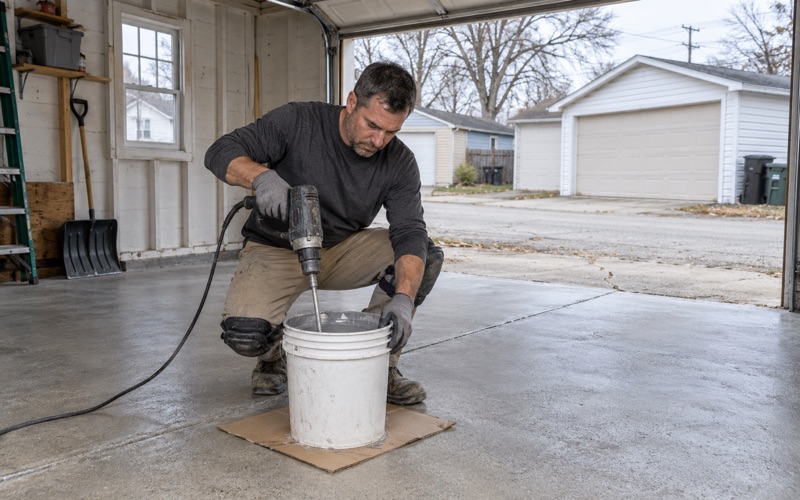
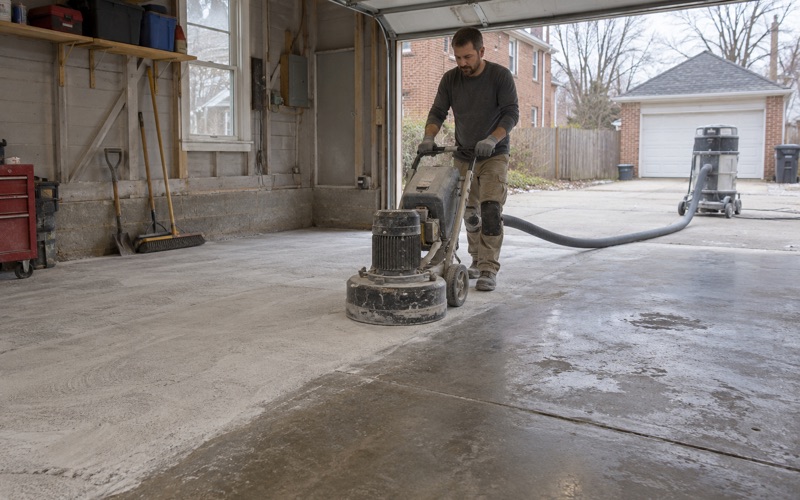
So our quotes in this village begin with what the slab has been through. We price moisture testing as its own line on the proposal, we open the surface with a diamond grinder or shot blaster rather than acid, and we put in writing which product, which system build and what finished thickness you are paying for.
What we will not do is answer the floodplain question for you. That belongs to the village, and the sections below explain who to ask, why the answer may still change, and what a floor coating can honestly do on a lot near the creek.
Crystal Creek, the Floodway and Maps Still Being Revised
A creek that starts at O’Hare
Schiller Park is a village of about 11,709 people in Leyden Township, Cook County, and a creek runs straight through it. The village’s annex to the 2024 Cook County multi-jurisdictional hazard mitigation plan states that a large portion of the village is within a floodway, as Crystal Creek runs northeast to southwest through town. The creek originates upstream on O’Hare property and is tributary to the Des Plaines River.
That geography shapes floor work more than any finish choice does. A garage, basement or ground-floor slab on a low lot near the creek corridor can take on water from below and from the side, and concrete holds what it absorbs long after the surface looks dry.
Flood maps the village calls incomplete
The countywide flood insurance rate map in effect dates from August 19, 2008. The same annex is candid about it: the village says its flood maps do not adequately address risk, and it is waiting for a village-wide letter of map revision to be filed. That filing is pending completion of the IDNR Crystal Creek IIA and IIB construction and its as-built plans.
In practice, the map you look up today may not be the map that governs your parcel after the revision. We do not treat an online flood map as the final word in Schiller Park, and we suggest owners do not either.
Drainage work already underway
The village has not been standing still. Crystal Creek flood control permits were approved and signed by the Army Corps of Engineers with Schiller Park and Franklin Park, aimed at moving storm water out of the area south of Irving Park Road toward the Des Plaines River faster. A separate drainage improvement southwest of Irving Park Road and Des Plaines River Road received $500,000 in Cook County ARPA stormwater funding.
Those projects may change how water behaves around a given block over time. They do not change what a slab already absorbed before they were finished, which is why our testing comes first.
Looking for epoxy-flooring closer to Wood Dale? See Epoxy-Flooring Services in Wood Dale.
Who Answers the Floodplain Question, and What the Code Asks
The Community Development Director
Under the village’s 1994 flood damage prevention ordinance, floodplain management sits with Engineering and Community Development, and the Community Development Director serves as floodplain administrator. If you want to know whether your parcel is in the floodway or the floodplain, that office is the one to ask, not a flooring contractor. The village does not participate in the Community Rating System and has no certified floodplain managers on staff, so expect a direct conversation with the department.
We do not determine floodplain status, and we will not guess at it on a quote. When a job’s scope depends on the answer, we ask the owner to confirm it with the village before we schedule.
Flood-resistant materials below the protection elevation
Chapter 151 of the municipal code requires buildings in the 100-year floodplain, and those outside it but within the 500-year floodplain, to be protected from flood damage below the flood protection elevation for new buildings and substantial improvements. Areas below that elevation must be built of flood-resistant materials. A substantial improvement is one costing 50 percent or more of market value, and the code considers it to begin with the first alteration of any wall, ceiling, floor or other structural part.
A floor coating is not a substantial improvement, and it does not floodproof a building. It raises nothing to the flood protection elevation and should never be described as flood-resistant construction. If your floor work is one piece of a larger remodel, the village decides how the whole project is classified.
Why this matters for a coating quote
Knowing where a floor sits relative to these rules tells us what to expect from the slab. A basement or ground-floor room below the flood protection elevation is the room most likely to have taken water, and the room where a coating’s warranty exclusions matter most. We read those exclusions to you before the job is sold, with moisture named first.
Testing a Slab That May Have Been Wet
The tests we run before anything is applied
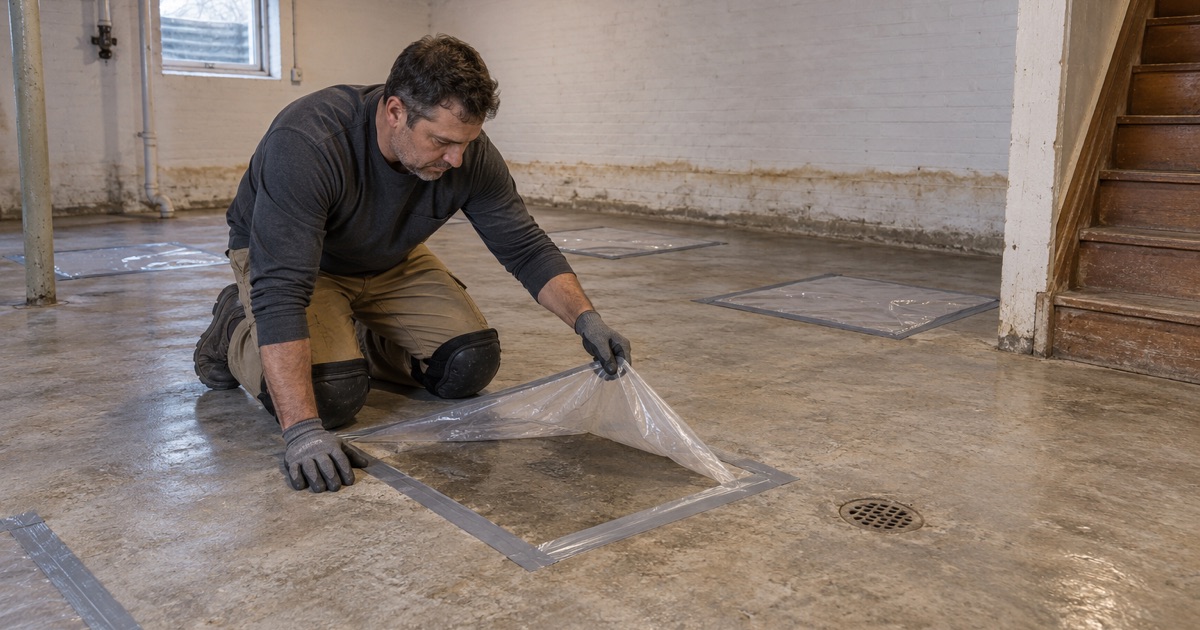
Schiller Park’s housing was mostly built in the 1950s and 1960s, with 1,395 units from the 1950s and 1,425 from the 1960s, and none built since 2010. Slabs that old may have no vapor retarder under them at all, and a dry-looking floor near a creek is not proof of a dry one. We start with an ASTM D4263 plastic sheet test as a quick screen, then run ASTM F1869 calcium chloride tests for moisture vapor emission rate or ASTM F2170 in-situ relative humidity probes set into the slab.
Those readings are compared against the ASTM F710 moisture thresholds and the coating manufacturer’s own limits. Testing is a priced line in the scope on a basement and a garage alike, not an upsell after a floor has blistered.
What the readings tell us
Low readings mean we can proceed with a standard system. Elevated readings mean a moisture-mitigation primer goes down before any color coat, or a urethane cement system is specified for a floor that will keep breathing. Efflorescence, the white mineral crust along cracks or around a floor drain, tells us water has moved through that concrete before, and we note it on the proposal.
Where hydrostatic pressure is pushing water up through a basement slab, no coating fixes the source. We say so plainly and point the owner toward drainage or foundation work first.
Reading the old floor and the cracks
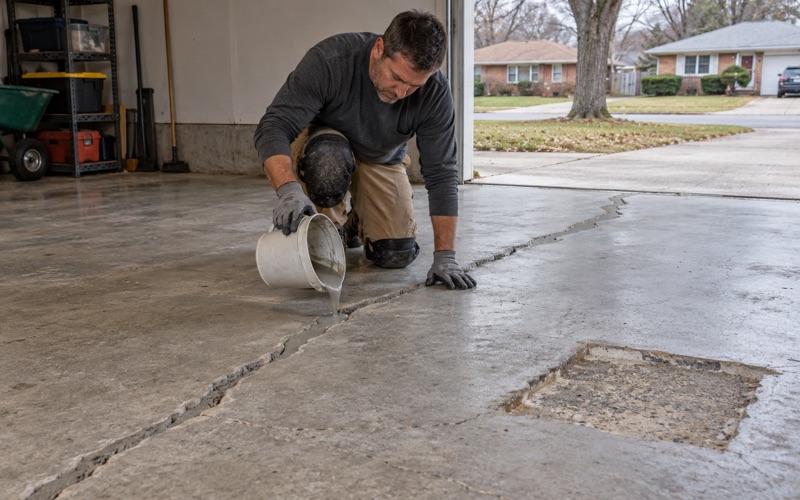
Many garages here already carry a previous coating. We look at how it failed, whether it lifted in sheets, blistered or simply wore through, because the failure pattern usually tells us what the moisture did. We also read the cracks: a coating is a film that follows the slab, and it will mirror movement rather than stop it. When a slab needs repair or replacement before it can be coated, you hear that from us before you see a price.
Timing the test after water has been in the room
A reading taken a week after a basement held standing water describes that week, not the floor’s normal condition. If a room has taken water recently, we would rather let the slab dry and test it again than coat on a number we do not trust. That can mean a second visit, and we put the reason for it in writing.
We also test in more than one spot. The corner by the floor drain, the strip along a foundation wall and the middle of the room often read differently, and the wettest reading is the one the system has to be built for.
What a Coating Can and Cannot Do Near the Creek
Building the system for a damp-prone floor
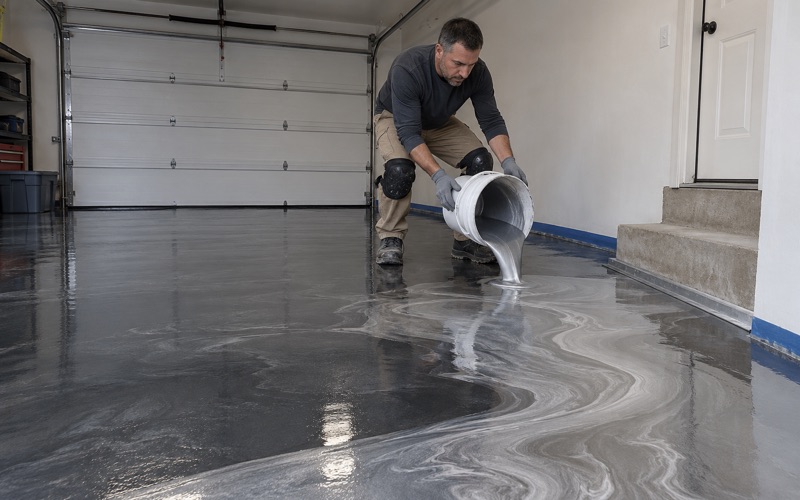
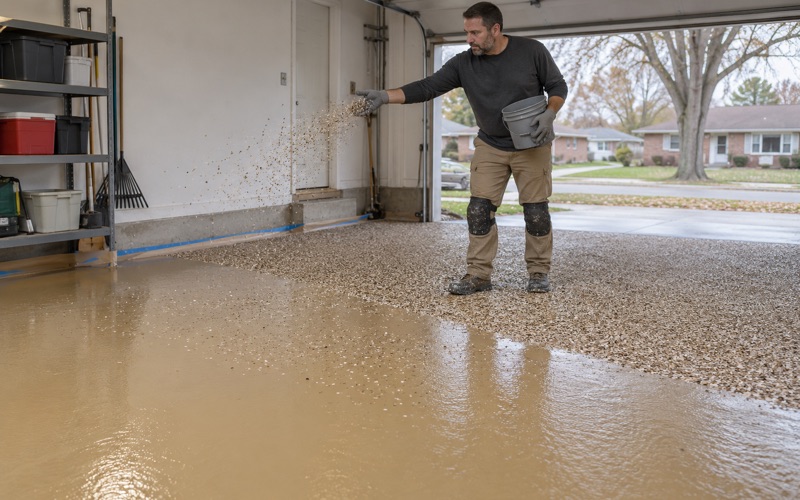
Every slab is opened mechanically to an ICRI CSP profile suited to the system, by diamond grinding or shot blasting, never acid etching. On a basement or ground-floor room that has seen water, we favor 100% solids epoxy over a moisture-mitigation primer, with a quartz aggregate or vinyl flake broadcast for traction and a polyaspartic or polyurea topcoat. Grinding dust and slurry are collected on site and never washed toward a street drain, which matters on a block that already drains toward the creek.
Cure is scheduled against slab temperature and the dew point spread at the slab surface, not the calendar. A cold, damp basement can show amine blush on an epoxy cured in the wrong conditions, and an unheated garage sometimes has to wait for spring.
Drains, sump pits and the edges of the room
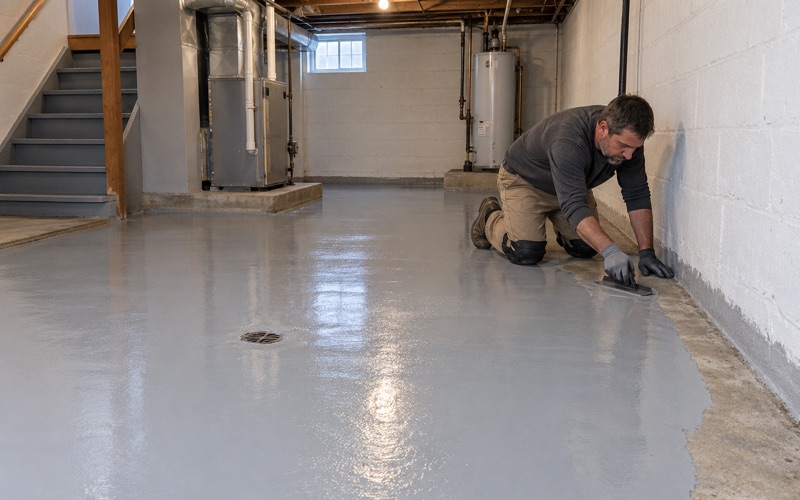
The places water enters and leaves a basement are the places a coating is most likely to let go. We detail the edge around a sump pit and the lip of a floor drain so the coating terminates cleanly instead of feathering into a joint that stays wet, and we keep the slope toward the drain intact. Along foundation walls, we stop the system where the slab meets the wall rather than pulling it up a surface that may weep.
If a drain cover or sump lid has to come out for the work, it goes back in the same position. A floor that sheds water toward its drain before we arrive should still do that when we leave.
What it will not do
A coating will not keep a sump pit from overflowing or stop a basement sewer backup. It will not lift your floor above the flood protection elevation or change how the village classifies your property. What it does well is resist hot tire pickup, clean up easily after a wet season and protect concrete that is dry enough to hold it.
Before a Schiller Park job starts
Owners occupy 59.2 percent of the village’s occupied homes, and 708 renter-occupied units sit in five-to-nine-unit buildings. On rental work we schedule with the owner and around the tenants who still need the garage or basement. Every home job gets a written contract and the Home Repair: Know Your Consumer Rights pamphlet first, as the Illinois Home Repair and Remodeling Act requires. Illinois issues no state license for coatings work, so we confirm the village’s own contractor registration, bond and insurance requirements before a date goes on the calendar.
- 20+ Years Coating Floors
- Moisture Testing in Every Scope
- Free Written Estimates