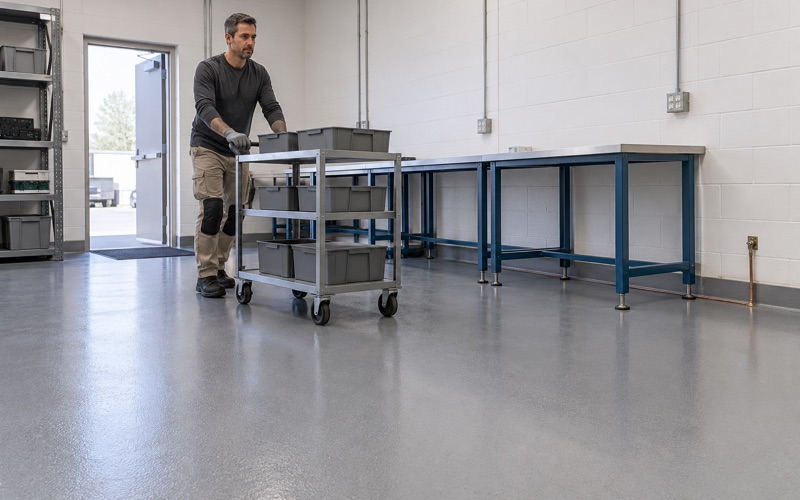
Waukegan Epoxy Flooring has spent more than 20 years installing epoxy flooring in Prospect Heights homes and businesses, and the first conversation we have here is usually about paperwork rather than color chips. In this city, the question of who is allowed to work on a floor gets settled before the question of what goes on it. We would rather walk an owner through that order of operations at the estimate than have it surface halfway through a job.
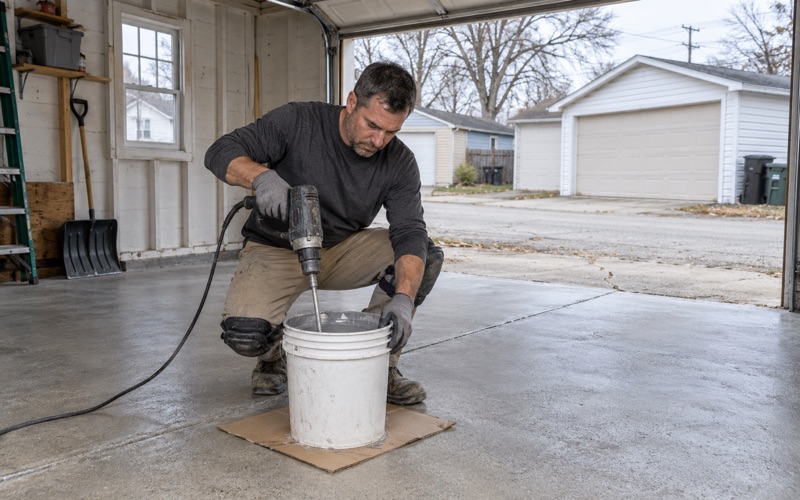
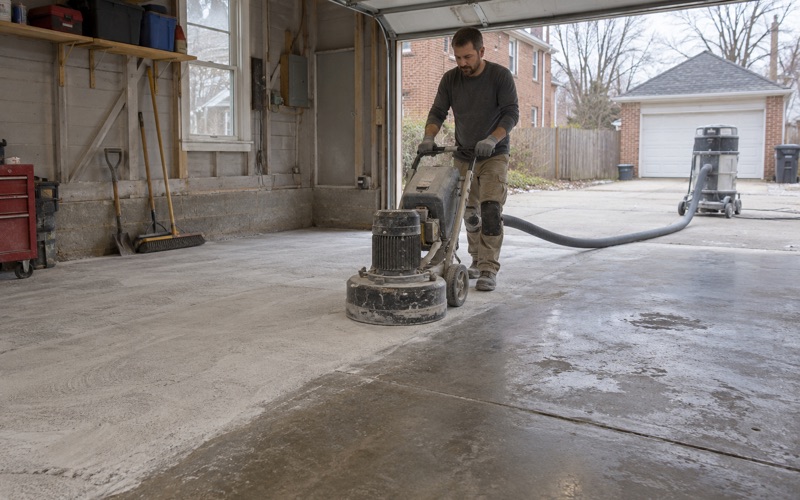
Our own part of the floor does not change from one address to the next. We open the slab with a diamond grinder or a shot blaster instead of an acid wash, we price moisture testing as a line in the scope, and we write the product, the system build and the finished thickness into the proposal so the finished floor can be checked against it. What changes from town to town is the set of rules around the people doing the work, and here those rules are unusually specific.
This page covers how that plays out locally: who has to be licensed and bonded, when a homeowner can step out from under that requirement, what the city expects to see at permit application, and which concrete inspections apply to garages and basements. It closes with the call worth making before anyone signs a quote.
A City That Licenses and Bonds Its Contractors
Prospect Heights is a city rather than a village, and its Building/Engineering Department publishes specifications and guidelines that set out how permitted work proceeds. The line that matters most for any floor job riding on a permit is short: every contractor must be licensed with the City of Prospect Heights and submit a $25,000 surety bond naming the city. The document we read lists the license fee at $25, but it carries a revision date of March 2007, so treat both figures as a starting point to confirm rather than as today’s numbers.
What the $25,000 Bond Is For
In general terms, a surety bond is a guarantee backed by a third party that the contractor will meet its obligations, and naming the City of Prospect Heights makes the city the party it protects. If a contractor walks away from obligations tied to a permit, the city has a bonded source to look to rather than chasing a company based somewhere else. That is a different thing from insurance, which covers damage and injury, and different again from a warranty, which covers the floor itself.
For a homeowner, the practical effect is a filter. A contractor who cannot or will not post the bond is not going to be on a Prospect Heights permit, and finding that out at the estimate costs far less than finding it out after the slab has been ground.
Trades With Their Own Bond Rules
The same specifications single out plumbers, roofers and sanitary sewer contractors, each of whom submits a separate $25,000 surety bond. Plumbers are expected to hold a State of Illinois or City of Chicago license, and roofers a State of Illinois license. Illinois issues no state license for coatings work, so for a floor installer the city’s own license and bond are what the specifications ask for.
That matters when a basement project mixes trades. If a floor drain is relocated before the coating goes down, the plumber carries a bond obligation separate from whoever coats the floor, and each one has to be in order.
What a Stop Work Order Means on a Floor Job
The specifications are blunt about enforcement: failure to provide a bond or a copy of a license results in a Stop Work Order. On a coating job, timing makes that worse than it sounds. A ground slab left open collects dust and moisture, a primer abandoned past its recoat window has to be abraded again, and a crew pulled off mid-system can turn a two-day floor into a second round of prep.
We confirm each town’s contractor registration, bond and insurance requirements before a job goes on our calendar for exactly this reason. A schedule built on paperwork nobody has checked is a schedule someone else can stop.
Looking for epoxy-flooring closer to Winnetka? See Epoxy-Flooring Services in Winnetka.
When the Homeowner Is the Contractor
The bond requirement carries one stated exception: homeowners acting as their own contractor for all work do not have to submit a bond. The wording is ‘for all work,’ and that phrase carries the weight. It describes an owner running the whole job, not an owner who handles one piece of it.
What ‘All Work’ Changes
An owner who grinds, primes and coats their own garage floor under a permit sits inside the exception. An owner who hires anyone for any part of the permitted work is not acting as their own contractor for all of it, and on our reading the hired contractor still has to be licensed and bonded. If a split arrangement is planned, ask the city how it reads its own wording before relying on it.
The Owner-Supplied Material Arrangement
A common variation is the homeowner who buys a coating kit or a contractor-grade product and wants us to install it. Supplying the material does not make the owner the contractor, because the person doing the work is still the one on the floor. It also tends to leave nobody responsible for whether the product suited the slab in the first place.
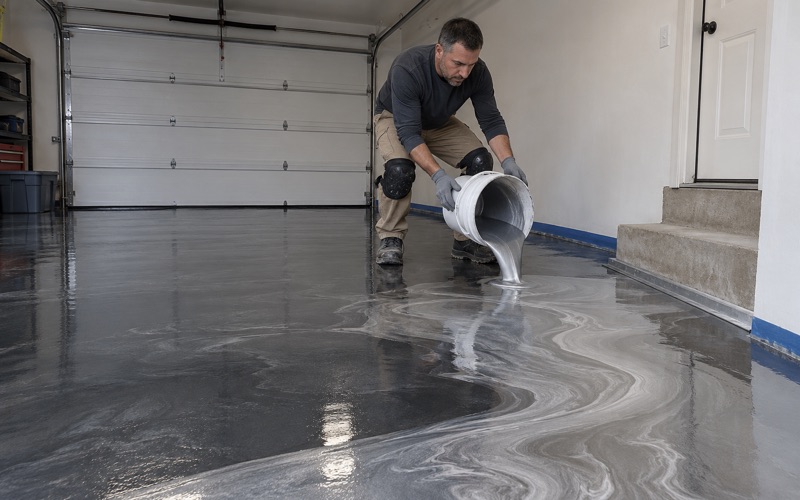
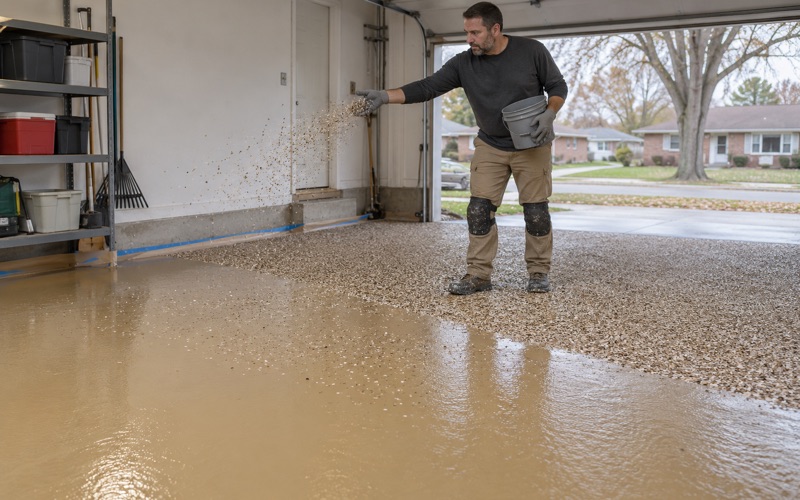
We prefer to specify the system ourselves, whether that is a 100% solids epoxy base with a vinyl flake broadcast or a quartz aggregate broadcast under a polyaspartic topcoat. The proposal names the product and the finished thickness, so the owner can see what is being installed and hold us to it.
Doing It Yourself Without Cutting Corners
Owners who take on the whole job themselves are exempt from the bond, not from the work. Acid etching leaves a weak, uneven profile next to diamond grinding, which reaches the ICRI CSP 2 or 3 profile a coating can actually grip. A plastic sheet test under ASTM D4263 is a reasonable first look at moisture for a do-it-yourselfer, though it is a screening test rather than a measured number.
Hot tire pickup is the failure most homemade garage floors show first, usually because a thin, low-solids product went down over a slab that was never properly opened. When an owner calls us after that happens, the old film has to come off before anything new goes on, which makes the second floor more expensive than the first.
Every Contractor Named, and the Concrete on the Inspection List
The specifications require all contractors to be named and registered with the city when the permit application is submitted. That rules out the familiar pattern where a general contractor pulls the permit and then brings in subcontractors as the job moves along. If a basement finishing project includes a coated floor and the coating installer is not named at application, the job has a gap in it from day one.
Naming the Floor Installer at Application
On a larger remodel, the floor coating is often the last trade in and the last one decided. We ask the general contractor or the owner whether the permit is already filed, and if it is, whether our company was named on it. If it was not, that gets sorted out with the city before we mobilize, not after.
For a stand-alone coating on an existing floor, the question is different: whether the work rides on a permit at all. The specifications we read do not say whether a coating by itself does, and we will not guess on an owner’s behalf. Building & Zoning can answer that for a specific address and scope.
Concrete Flooring Inspections for Garages and Basements
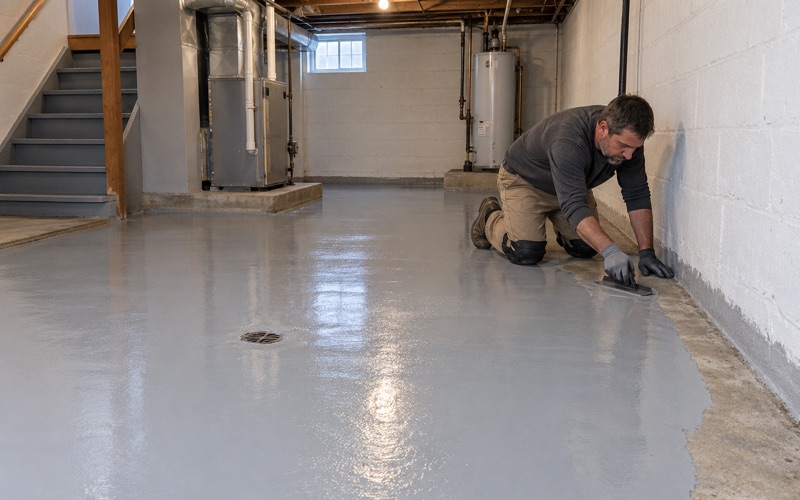
Among the required building inspections, the specifications list ‘Concrete Flooring (Garage/Basement/Stoop/Sidewalk/Crawlspace)’, alongside footings, foundation walls and underground plumbing. That inspection concerns new or replaced concrete, not a coating going over an existing slab. It still matters to us, because a garage or basement slab poured under a permit is often the floor we are later asked to coat.
Fresh concrete needs time to give up its mix water, and a slab poured without a vapor retarder under it behaves differently from one sitting on a retarder that meets ASTM E1745. Model codes such as the 2021 International Residential Code exempt garage slabs from the vapor retarder requirement under R506.2.3, so a dry-looking new garage floor proves nothing on its own. We measure instead of assuming, with ASTM F2170 in-situ relative humidity probes or ASTM F1869 calcium chloride testing read against the coating manufacturer’s limits.
Inspection Scheduling and Working Hours
The specifications ask for inspections to be scheduled two business days ahead and set construction hours of 7:00 a.m. to 6:00 p.m., Monday through Saturday, with no work on Sundays or observed holidays. A multi-coat floor has recoat windows measured in hours, so we plan the system around those limits rather than discovering late on a Saturday that a topcoat cannot go down before the cutoff. A broadcast floor that would otherwise run into the evening gets split across two days instead.
Calling Building & Zoning Before the Quote
Because the specifications are dated, the most useful thing an owner can do before collecting quotes is call the city. Building & Zoning is at 8 North Elmhurst Road, and the number in our research is 847-398-6070, extension 211. A ten-minute call settles more than a stack of competing bids will.
Questions Worth Asking
Ask whether the scope you have in mind needs a permit, and if so, what the current contractor license fee and bond amount are. Ask whether a contractor’s bond already on file from an earlier job covers a new permit. If you plan to do part of the work yourself, ask how the homeowner exception applies to a split job.
Then ask every contractor you are considering whether they are licensed with the City of Prospect Heights and can show the bond. A contractor who has to look up what the question means is telling you something useful about how the rest of the job will go.
What Our Proposal Puts in Writing
Our side of the paperwork is a written contract and the state’s Home Repair: Know Your Consumer Rights pamphlet, both delivered before work starts, as the Illinois Home Repair and Remodeling Act requires for home jobs. The proposal names the product, the system build and the finished thickness. It also carries moisture testing as a priced line, on a garage slab and a basement slab alike, rather than something offered after a floor has already blistered.
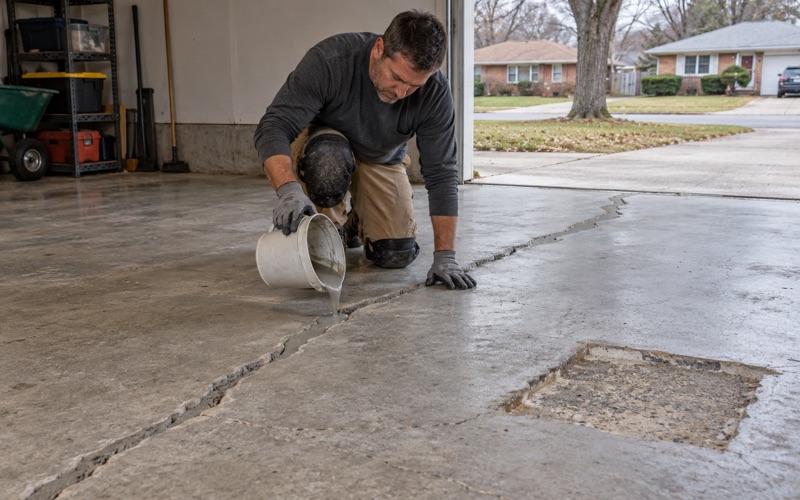
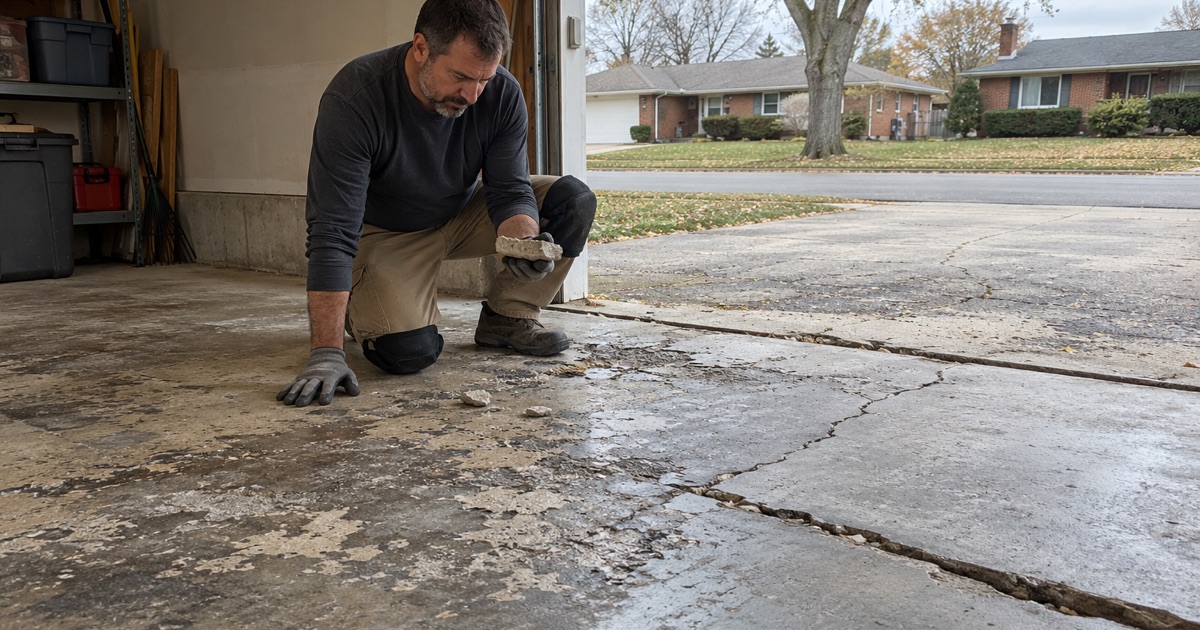
We read the cracks and any old coating before quoting, and if a slab needs repair or replacement before it can be coated, we say so plainly. A coating is a film that follows the concrete under it, and it will not stop a slab from moving. We would rather an owner hear that from us than learn it from a crack line telegraphing through a new floor.
Warranty Exclusions, Read Out Loud
Warranty exclusions get read before the job is sold, with moisture named first. A floor that blisters from vapor drive was never going to be covered, and an owner deserves to know that before choosing between a standard primer and a moisture-mitigation primer. Grinding dust and slurry are collected on site and kept away from street drains, and the coatings we choose fall within the Illinois VOC content limits that bind installers as well as manufacturers.
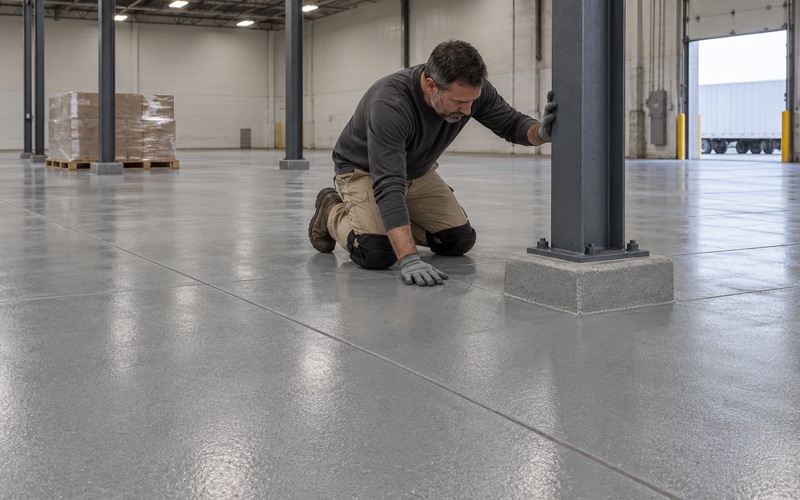
Once the license, bond and permit questions have answers, scheduling the floor is the straightforward part. We set cure times against slab temperature and the dew point spread at the surface, and commercial floors along Rand Road and Milwaukee Avenue get scheduled around the hours those buildings have to stay open, including overnight and weekend windows.
- 20+ Years Coating Floors
- Moisture Testing in Every Scope
- Free Written Estimates