Waukegan Epoxy Flooring has spent more than 20 years installing epoxy flooring in Park City and across the Waukegan area, and the first thing we ask on any call here is which piece of concrete is actually yours. That answer decides the system we quote, who has to approve the work, and whether a coating makes sense at all.
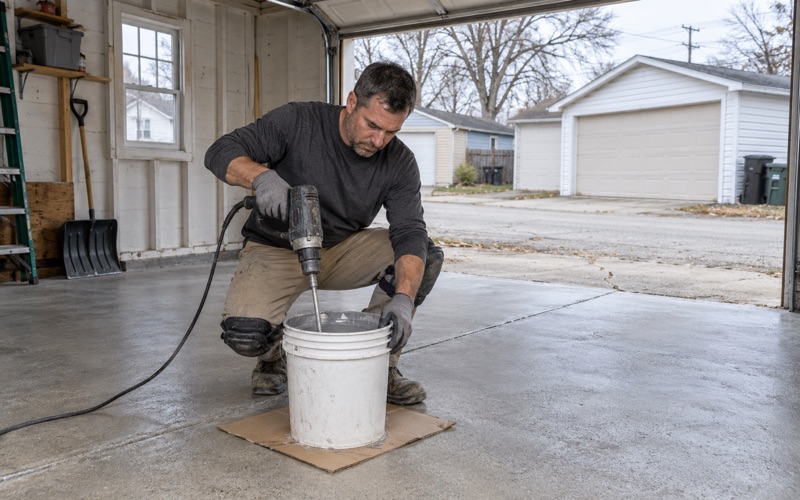
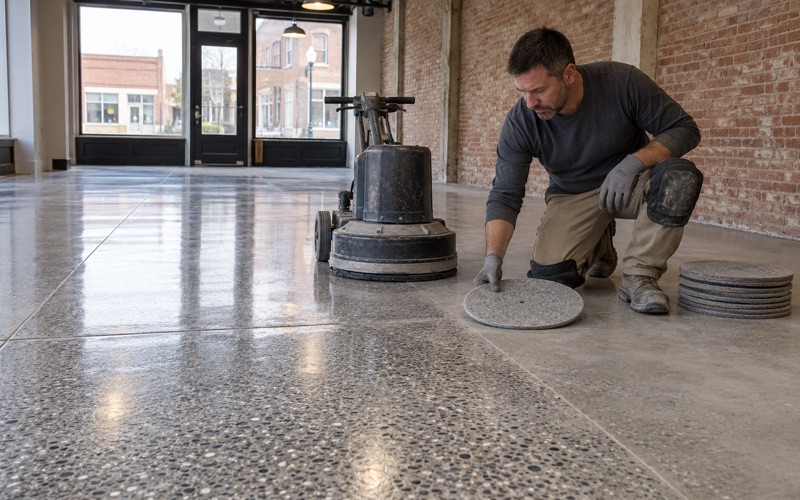
Our method does not bend to the slab. We open the surface with a diamond grinder or a shot blaster, never with acid, and moisture testing sits in the written scope as its own line rather than something offered after a coating has already lifted. The proposal names the product, the system build and the finished thickness, so you can hold what we quoted against what went down.
What changes in this town is the mix of floors. Most homes here sit on a different kind of foundation than a typical suburban garage, and that shapes nearly every conversation we have before a price is written.
Who owns a concrete floor in Park City
Park City was incorporated in 1958 by referendum, and the push came from trailer park owners who wanted to stay out of Waukegan. That origin is still visible in the housing count. Of the 2,840 housing units in the city, 1,584 are mobile homes, according to the Census Bureau’s 2020-2024 American Community Survey.
Ownership tilts further still. Of the 1,726 owner-occupied homes, 1,193 are mobile homes and 503 are single-family detached houses. Put plainly, about 500 site-built houses hold most of the owner-occupied garage slabs in town, and that is where a conventional garage floor coating usually lands.
What a manufactured home sits on
A manufactured home does not come with a poured garage slab of its own. Where there is concrete on a home site, it tends to be a carport pad, a shed floor or a patio. Those are real candidates for a coating, but they are smaller, they are often open to the weather, and the person living on the site may not be the one who controls them.
Why we settle ownership first
We would rather spend a few minutes on who owns the concrete than mail a proposal for a floor you cannot authorize. If you own a detached house, the slab is yours to decide on. If your home sits in a manufactured home community, the answer may belong to the operator, and we treat that as part of the quote rather than an afterthought.
The city covers 1.16 square miles and reaches into both Warren and Waukegan townships within Lake County, so a short drive covers every address we serve here. The question that varies from street to street is not distance. It is whose concrete it is.
Looking for epoxy-flooring closer to Gurnee? See Epoxy-Flooring Services in Gurnee.
Site-built houses and their garage slabs
For the owners of those detached houses, the job looks like a garage floor anywhere in Lake County, with one hard local requirement: it has to survive winter. Cars bring calcium chloride brine and rock salt in on the tires for months at a time, and the floor sits under that wet, salty film night after night.
Built for brine and salt
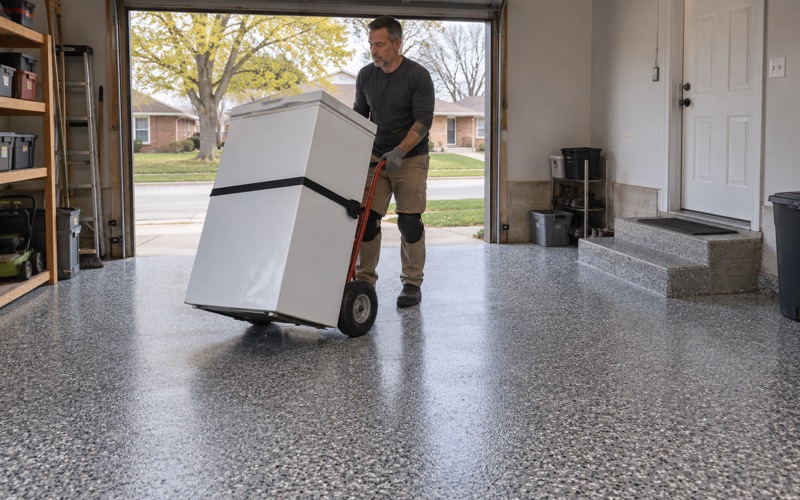
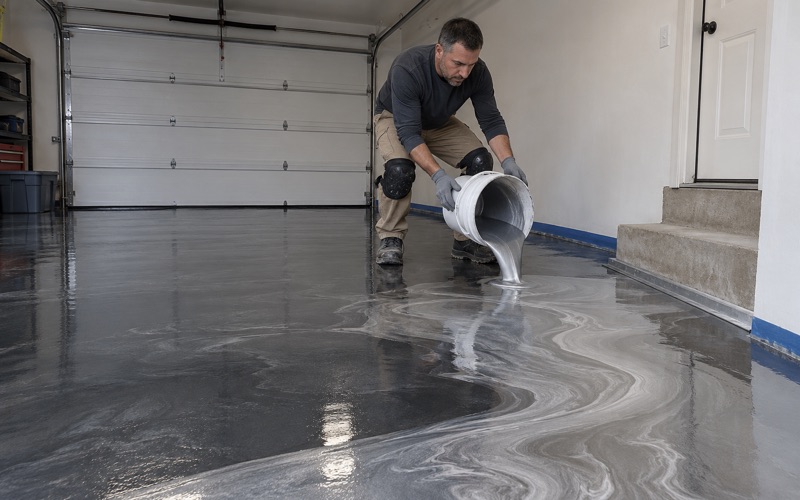
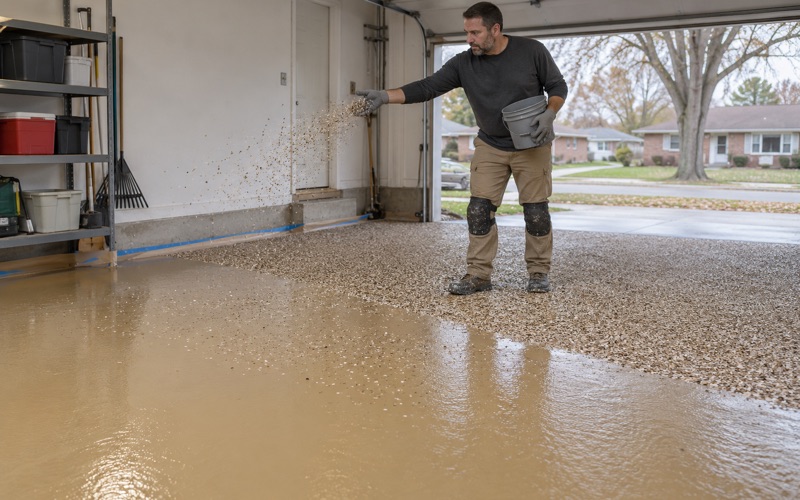
We build garage systems to take that abuse. A typical build is a 100% solids epoxy base coat, a full vinyl flake broadcast for texture and grip, and a polyaspartic or polyurea topcoat that resists hot tire pickup and stands up to deicer salts. Where a garage doubles as a workshop, quartz aggregate broadcast gives a coarser surface that holds traction better under wet boots.
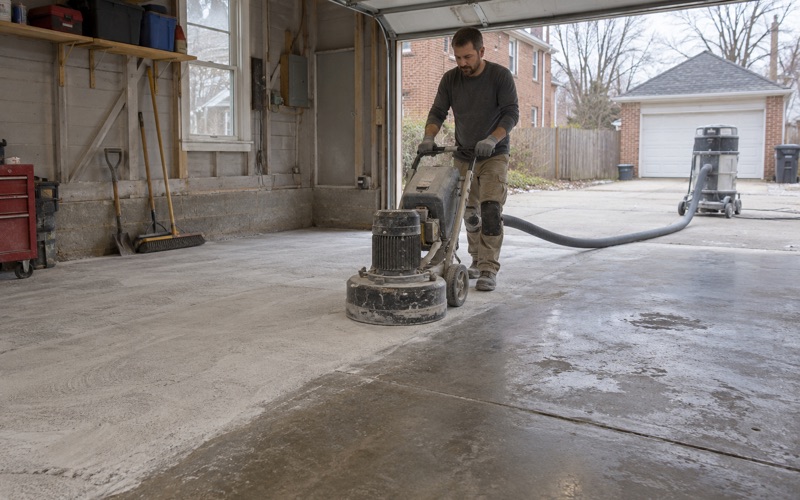
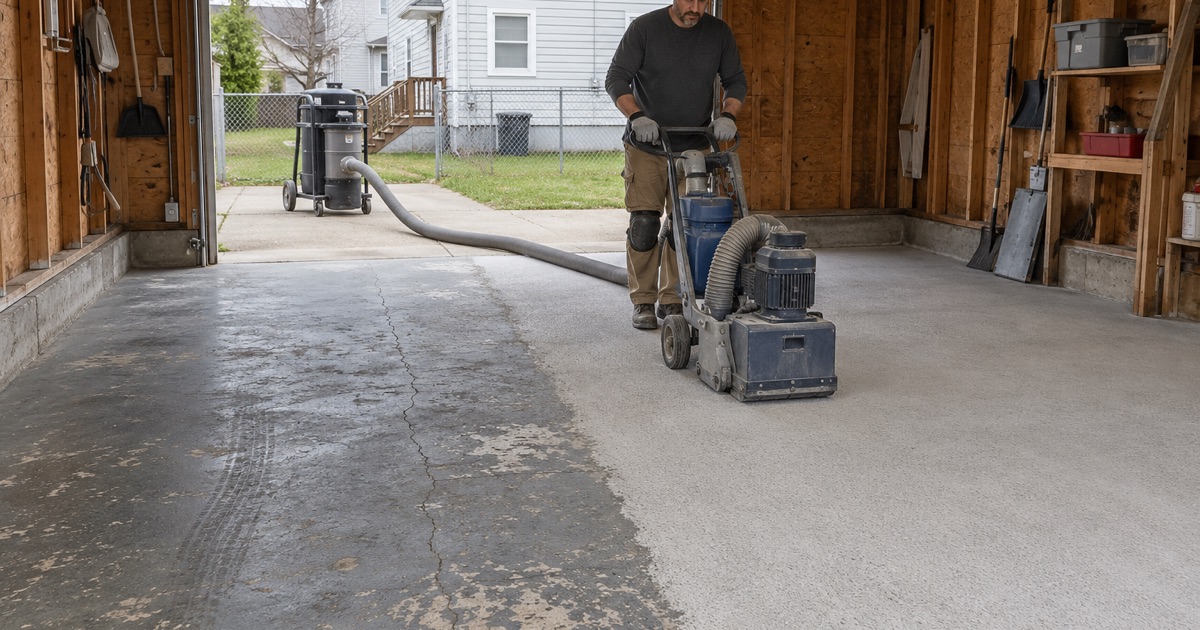
Every one of those layers depends on what happens before the first coat. We grind to an ICRI CSP profile the primer can actually key into, and we vacuum the dust at the grinder head. Grinding dust and slurry are collected on site and never rinsed down the driveway toward a street drain.
Reading the slab before the price
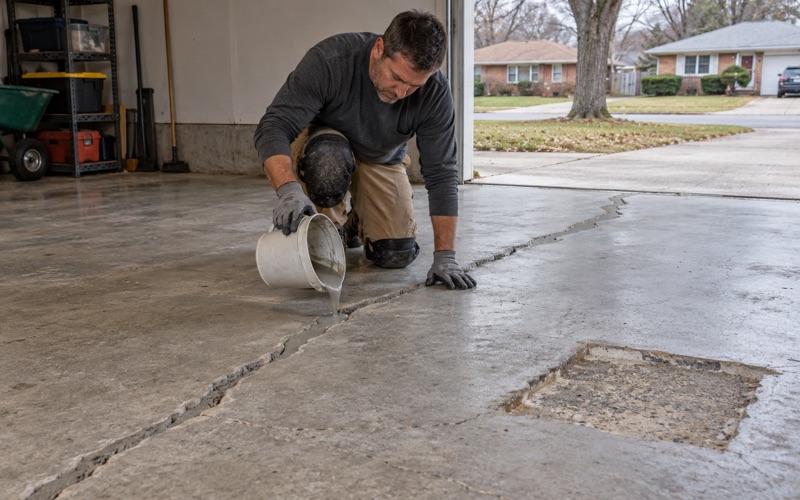
Before we quote, we walk the floor. Cracks, spalled patches, old paint and failing coatings each tell us something about how the slab has behaved, and we say plainly when a section needs repair or replacement before anything can go over it.
We also say what a coating cannot do. It is a film that follows the concrete under it, so a crack that keeps moving will eventually show through. We would rather tell you that at the kitchen table than promise a floor that hides movement.
Testing for moisture, then curing on the slab’s schedule
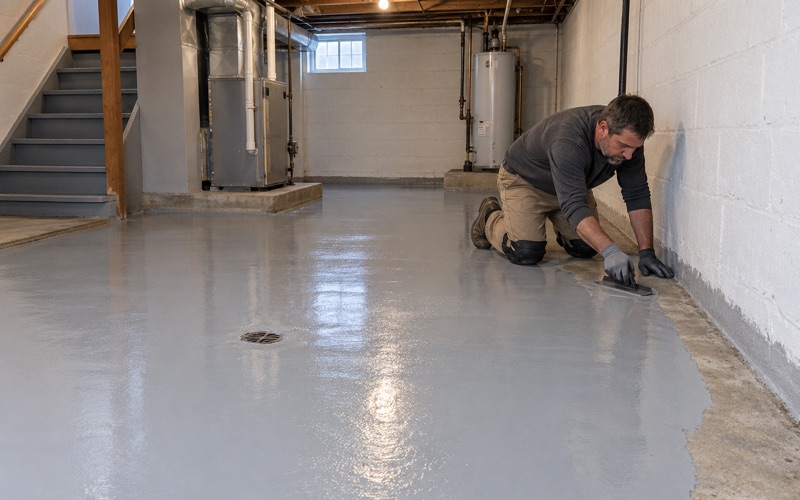
A dry-looking garage floor is not always a dry one. Depending on the slab, we use an ASTM D4263 plastic sheet test, an ASTM F1869 calcium chloride emission test or ASTM F2170 in-situ relative humidity probes, and if the readings call for it, a moisture-mitigation primer goes down first.
Curing is scheduled against slab temperature and the dew point spread at the slab surface, not against a date on the calendar. Coating a cold, damp slab invites amine blush and a weak bond. When an unheated garage is too cold to cure properly, we tell you it has to wait for spring.
Pads, sheds and patios in a manufactured home community
On Kehm Boulevard, Park City’s city hall at 3420 sits right beside Park City Manufactured Home Community at 3418, a 641-site, all-ages community built in 1962. That pairing says a lot about the town. A large share of the concrete a Park City homeowner might want coated is not a garage floor at all, and a fair amount of it sits on land someone else manages.
Carport pads and shed floors
An outdoor carport pad is a different job from an enclosed garage. Sunlight is hard on many epoxies, which can chalk and yellow when left exposed, so on an open pad we lean toward polyaspartic topcoats that hold their color outdoors. Drainage matters too, because a pad that holds standing water will test the edges of any coating.
Shed floors are usually smaller and lighter duty. Some need a full broadcast system; others are better served by a lithium silicate densifier that hardens the surface without building a film. We tell you which one fits the way you use the shed, rather than selling the most expensive build by default.
Patios that shift with the ground
A patio slab poured on clay till soils can heave and settle with the seasons. We look closely at the joints and cracks before quoting, because a coating will follow every one of those movements. If a patio is broken enough that a coating would only highlight the damage, we say so.
Ask the community before you coat the pad
In a manufactured home community, the operator, not the resident, may control what happens to a site’s concrete. We have not checked the rules of any specific community in Park City, and we will not guess at them. Before we schedule a pad, shed or patio inside a community, we ask you to get the operator’s answer, ideally in writing.
That step protects you. A coating applied without the right approval can become a dispute you did not need, and a pad belongs on the schedule only once the person with authority over it has signed off. If the operator wants to see our scope first, we are glad to send the proposal, which names the product and finished thickness.
Manufactured home communities in Illinois are licensed by the state under the Mobile Home Park Act, and individual community rules sit on top of that. Your lease or community rules are the place to start, and the office is the place to confirm.
Getting a quote in Park City
Illinois issues no state license for flooring or coatings work, so the useful question is what the local rules ask of a contractor. Park City’s own contractor registration, bond and permit rules for floor coating were not something we could find published online, so we call the City of Park City and confirm them before a job goes on the calendar.
What you get in writing
Every home job comes with a written contract and the Home Repair: Know Your Consumer Rights pamphlet before any work begins, as the Illinois Home Repair and Remodeling Act requires. Warranty exclusions are read out before you sign, with moisture named first, so there is no surprise about what the warranty covers.
The coatings we choose fall within the Illinois limits on VOC content under 35 Ill. Adm. Code Part 223 Subpart C, which apply to us as the installer as well as to the manufacturer. Lake County sits inside the Chicago 2015 ozone nonattainment area, which is part of why those limits are enforced here.
What we will not sell
We do not sell a floor coating as radon reduction. In Illinois, radon mitigation is work that takes a state license through IEMA, and a coated floor is not a substitute for it. If radon is the worry, we will tell you to call a licensed mitigator first.
Commercial floors in town
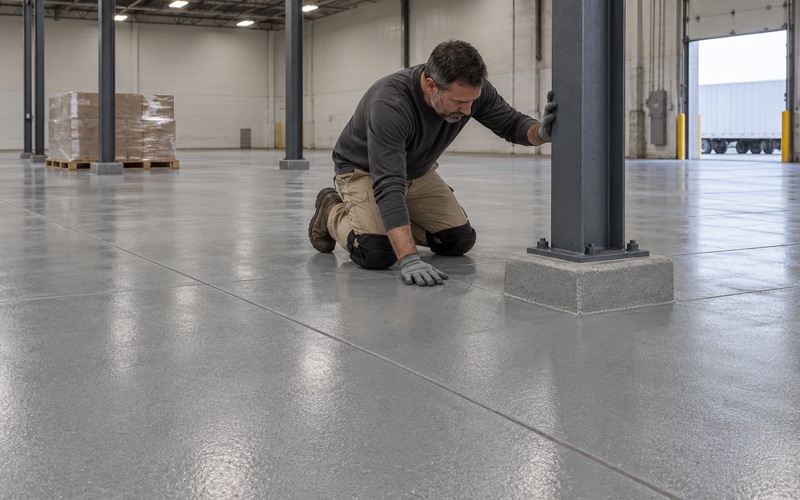
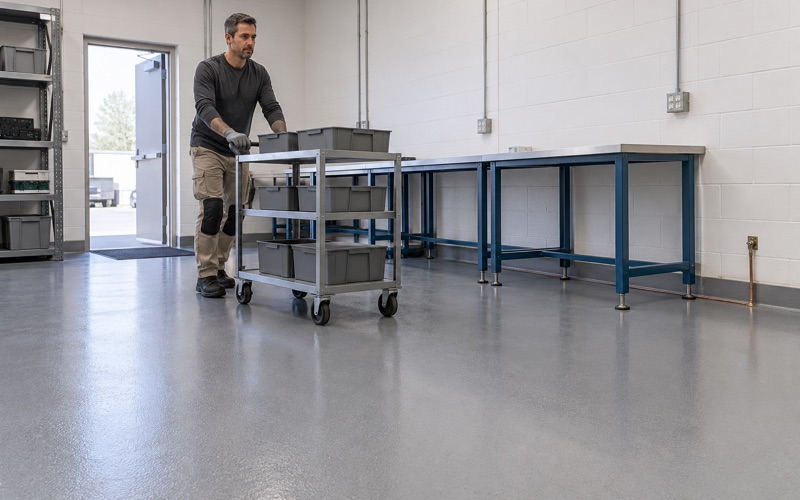
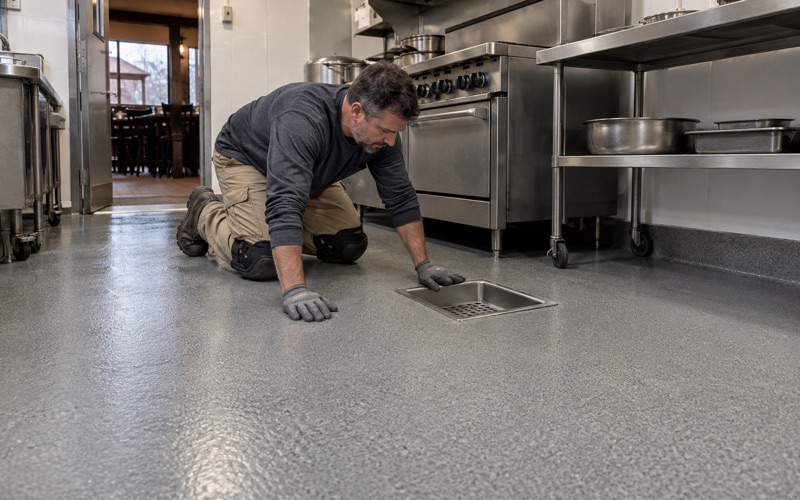
Park City also has shops, kitchens and small commercial spaces. A food service floor can involve Lake County Health Department food plan review, and coved floor and wall junctures under FDA Food Code 6-201.13 are often part of that conversation. We schedule commercial work around the hours a business has to stay open, including overnight and weekend windows.
When you call, tell us which floor you have in mind and who owns it. From there we can set a visit, take moisture readings, look at the cracks and write a scope you can check line by line.
- 20+ Years Coating Floors
- Moisture Testing in Every Scope
- Free Written Estimates