Waukegan Epoxy Flooring has spent more than 20 years installing epoxy-flooring in Lake Zurich and across Lake County, and the floors that teach us the most are the ones that never dry out. A production floor that gets hosed down every shift asks a coating to survive heat, chemistry and standing water all at once. That is a different job from a showroom finish, and we price, build and schedule it as one.
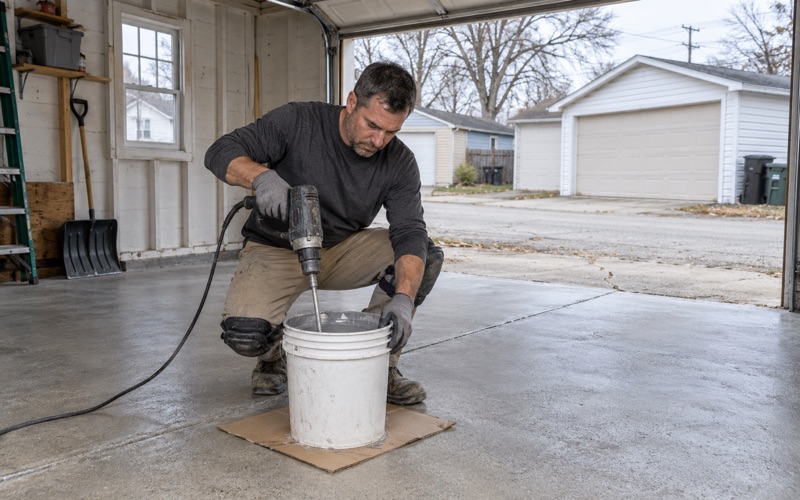
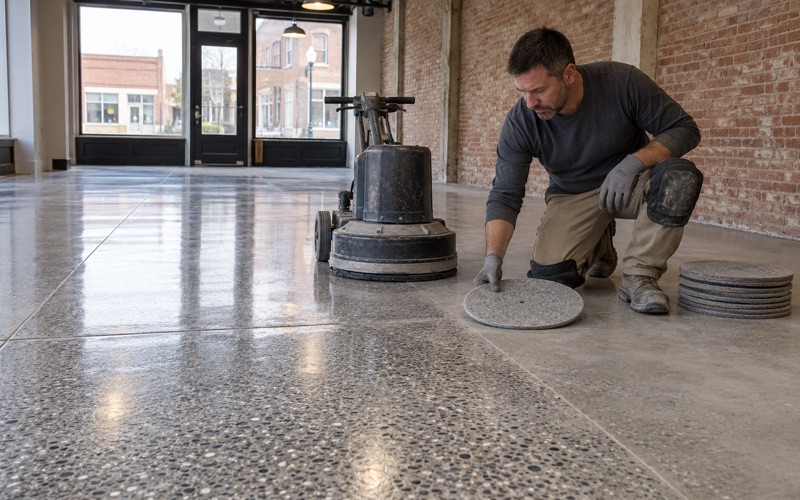
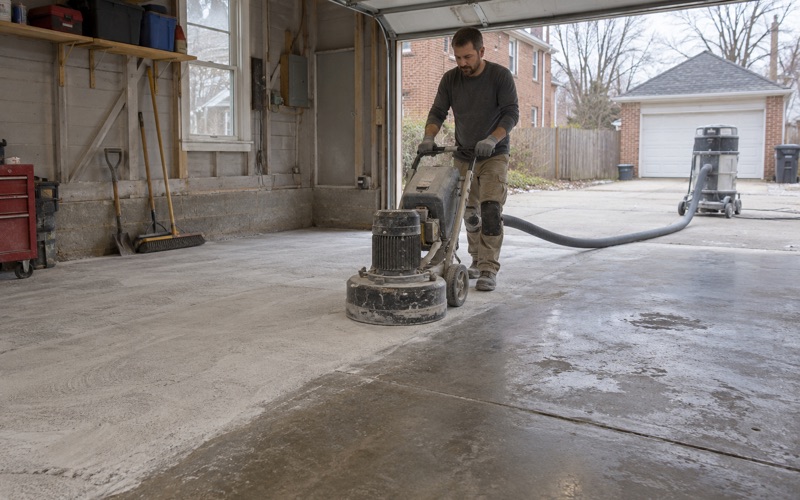
Before any resin is mixed, the concrete is opened with a diamond grinder or a shot blaster to the profile the system calls for; we never rely on acid etching. Moisture is measured as its own line item in the scope, whether the slab sits under a process area, a basement or a garage. The proposal then spells out the product, the layer-by-layer build and the finished thickness, so an owner can hold the installed floor up against the paper.
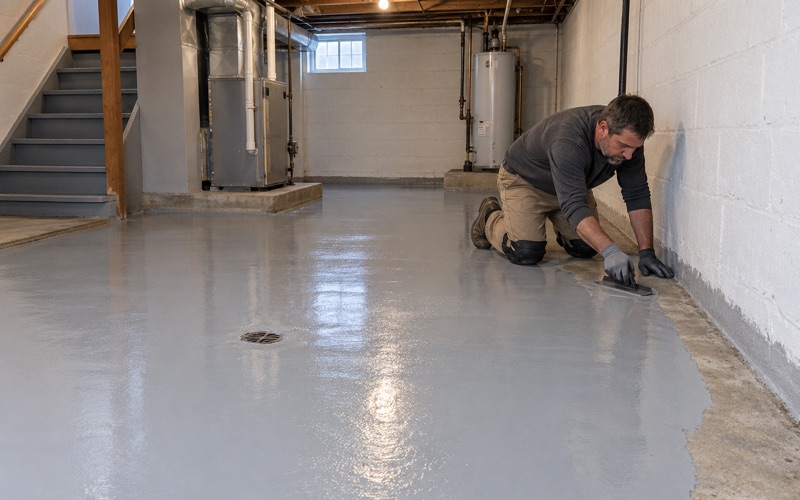
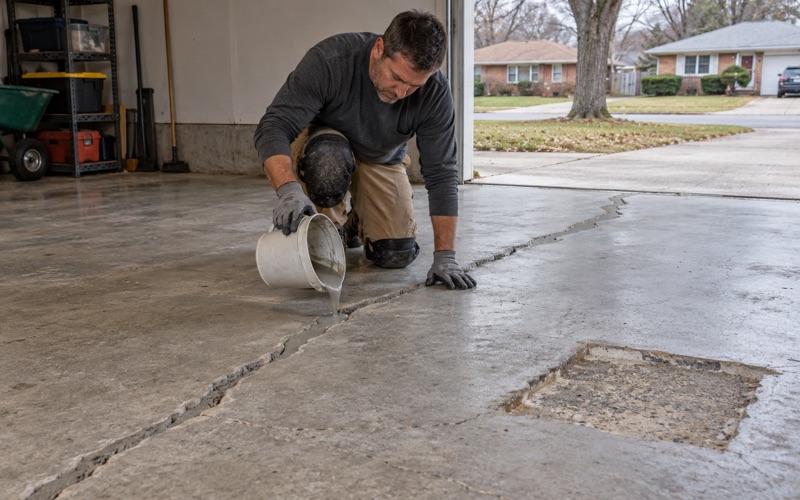
Garages and basements make up much of our work here, and they get the same testing and grinding discipline. This page, though, is about the wettest and hottest floors in the village, because they show most clearly why system choice matters more than color. Where a slab is cracked, spalled or carrying a failing old coating, we say so before quoting and tell you whether it needs repair or replacement first.
A Production Brewery on Donata Court, and What Its Floor Endures
Lake Zurich is a village in Ela Township, Lake County, named for the 232-acre glacial lake that sits completely inside its limits. It also brews beer at production scale. Phase Three Brewing, which Visit Lake County describes as one of the county’s largest and most-respected breweries, operates at 932 Donata Court inside the village, with a taproom and outdoor dining that put it on the Libation Trail.
Its founders, formerly of More Brewing, announced in March 2019 that they would begin by contract brewing at Lake Zurich Brewing Company before opening a location of their own. We have not seen Phase Three’s floor, its layout or its production volume, and nothing on this page describes them. What the brewery does show is that wet-process production is part of the village’s working landscape, and any brewer, food producer or commercial kitchen working that way faces the same floor problems.
Hot water, caustic and acid
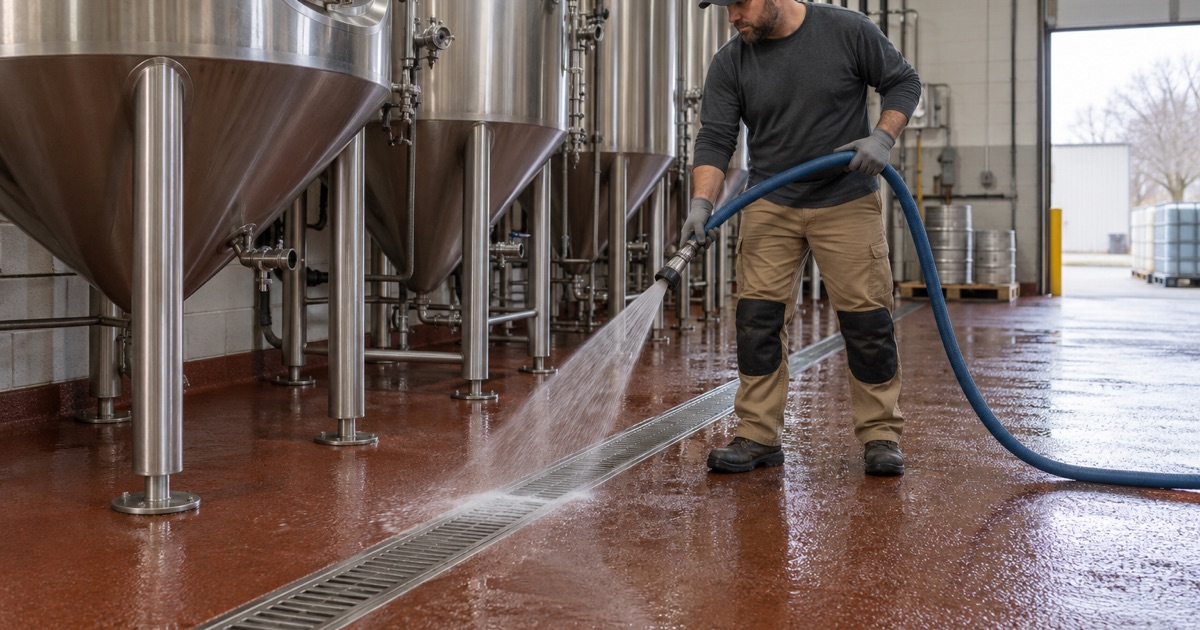
A brewhouse floor is hosed down daily, and the water hitting it is often hot. Cleaning cycles push hot caustic solutions through tanks and lines that drain or splash onto the slab, followed by acid sanitizers. Spent grain, wort and sugar spills join the mix, and sugars feed bacteria in any joint or crack that holds them.
Bare concrete does not tolerate that well. Acids attack the cement paste, caustic finds porous spots, and repeated wetting drives contaminants into the surface where scrubbing cannot reach. A sealed, chemical-resistant floor keeps all of it on top of the slab, where the next washdown can carry it to a drain.
Which systems belong there
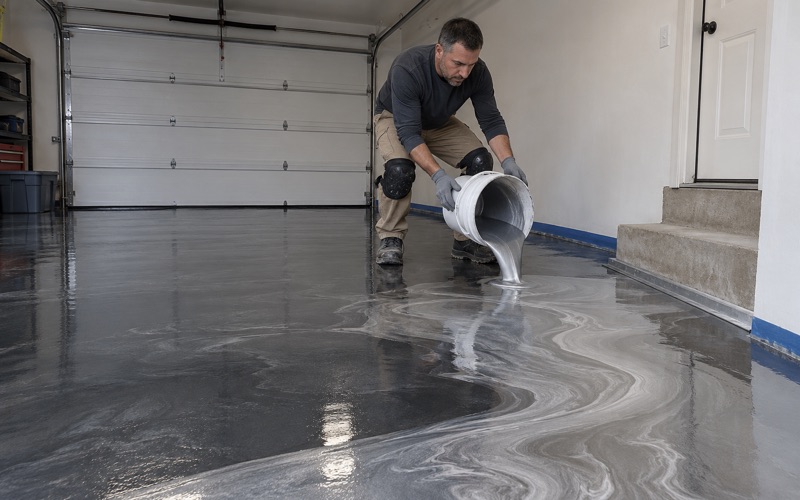
For brewhouse washdown floors, we usually look at urethane cement rather than a standard 100% solids epoxy. Urethane cement is troweled or raked on at heavy build, tolerates hot water far better than a thin epoxy film, and holds up to the caustic and acid cycles a cleaning program puts it through. Epoxy still earns its place in the drier storage rooms, packaging areas and offices nearby.
Cellars and cold rooms
The cellar side of a brewery sets a different test. Fermentation and conditioning areas run cool, tanks sweat, and the floor stays damp for long stretches even when nobody is hosing it. A system that cures and performs at lower temperatures matters there, and so does a texture that sheds condensation toward the drains instead of holding a film of water underfoot.
Looking for epoxy-flooring closer to Fox Lake? See Epoxy-Flooring Services in Fox Lake.
Thermal Shock and Why Thin Garage Coatings Fail There
Thermal shock is what happens when a floor at room temperature is suddenly flooded with near-boiling water, or a hot floor is chilled by a cold rinse. The coating and the concrete under it expand and contract at different rates, and a thin, rigid film can crack, lift or lose its bond at the edges. Repeated every shift, that stress shows up as delamination around drains, kettles and wherever hot hoses get aimed most often.
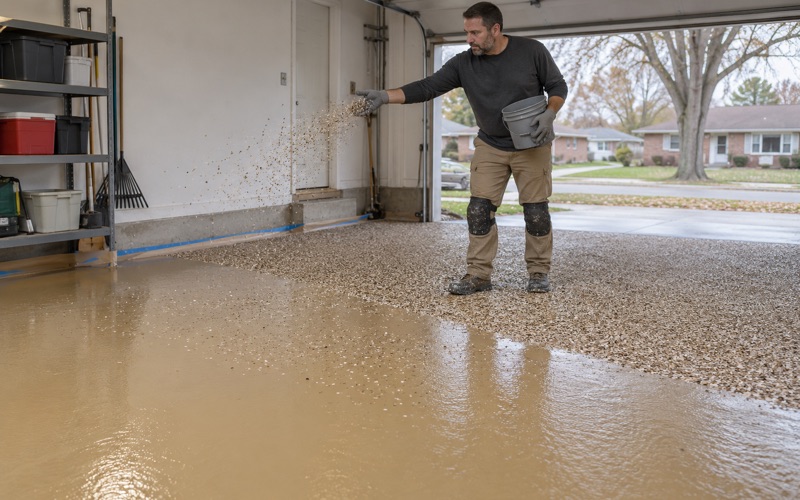
A decorative garage system, with a thin epoxy base, vinyl flake broadcast and a clear topcoat, is a good floor for a car and the wrong floor for a brewhouse. It was never built for hot liquid, and the flakes and clear coats that make it attractive add nothing to heat resistance. We tell owners plainly when the product they admired in a neighbor’s garage is the wrong product for a process room.
Thickness and bond
A heavier section spreads thermal stress and gives the coating enough mass to move with the slab instead of fighting it. Bond matters even more, which is why the slab is ground or shot blasted to an open ICRI CSP profile suited to the system, never etched with acid that leaves residue in the pores. A coating is a film that follows the concrete under it, so we also explain before the job that it will not stop a slab from moving or a crack from reopening.
Moisture under a wet floor
It sounds odd to test moisture on a floor that gets hosed every day, but vapor rising from below is a separate problem from water landing on top. An older slab may have no vapor retarder beneath it, and vapor pressure pushing against a coating from underneath causes blisters no topcoat can prevent. We run ASTM F2170 in-situ relative humidity probes or ASTM F1869 calcium chloride tests before the system is chosen, and moisture is the first exclusion we read out when we walk through the warranty.
Drains, Slope and Grip on a Floor That Is Always Wet
A brewhouse floor has to move water off itself, every shift, without leaving puddles behind. Standing water near a trench drain keeps the coating wet longer, holds sugars and grain where bacteria grow, and becomes the spot where someone slips. Slope to drains is part of the floor system, not something a coating can add afterward.
Reading the fall before coating
We check the existing fall toward each drain before quoting. A coating follows the slab under it, so a low spot in the concrete stays a low spot after the resin cures. Where water ponds, urethane cement and sloping mortars can be built up to correct modest fall, and where the problem is bigger we say plainly that concrete work has to come first.
Drain bodies and wall edges
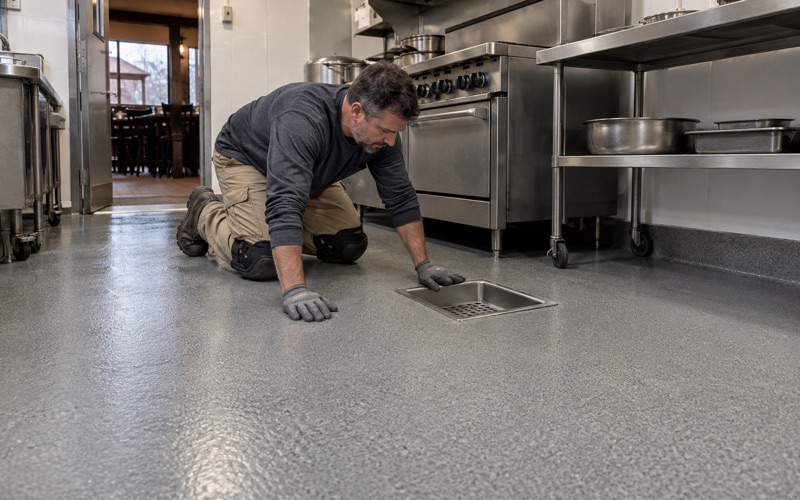
Drains and floor-to-wall edges are where wet floors usually fail first. We carry the coating into drain bodies and trench edges so water cannot get behind it, and coved floor and wall junctures keep washdown water from soaking into the base of the walls. If a project goes through Lake County Health Department food plan review, we build to the details that review sets rather than guessing at them.
Grip that survives cleaning
Slip resistance on a wet floor comes from texture, usually quartz aggregate broadcast into the body coat and locked down with a topcoat. Too little texture and the floor is dangerous when wet; too much and it traps grain and fights the squeegee. We set the aggregate size and broadcast rate for the room and its cleaning routine, so the floor stays both safe and cleanable.
Care once the floor is down
A well-built wet floor still needs a cleaning routine that suits it. We walk the crew through which cleaners and water temperatures the chosen system is rated for, and where a squeegee should push water. Small chips around kettles or drain edges are easier to patch early than after water has worked underneath, so we tell owners what to watch for in the first season.
Taproom Floors Versus Production Floors
A brewery with a taproom has two floors with two jobs, and treating them as one is how budgets get wasted. The production side needs heat, chemical and slip performance before anything else. The taproom is a customer space, where spills are beer and food rather than caustic, and the floor has to look good under foot traffic, chairs and table legs.
What suits a taproom
Taproom floors can carry decorative systems the brewhouse cannot, such as a 100% solids epoxy base with a vinyl flake or quartz blend, sealed with a polyaspartic or polyurea topcoat for abrasion and UV resistance near windows and doors. Texture still matters at bar wells and service stations, where spills are constant. Where an owner wants a polished look without a film coating, a ground and densified slab treated with lithium silicate densifier is another option.
When the floor is a garage after all
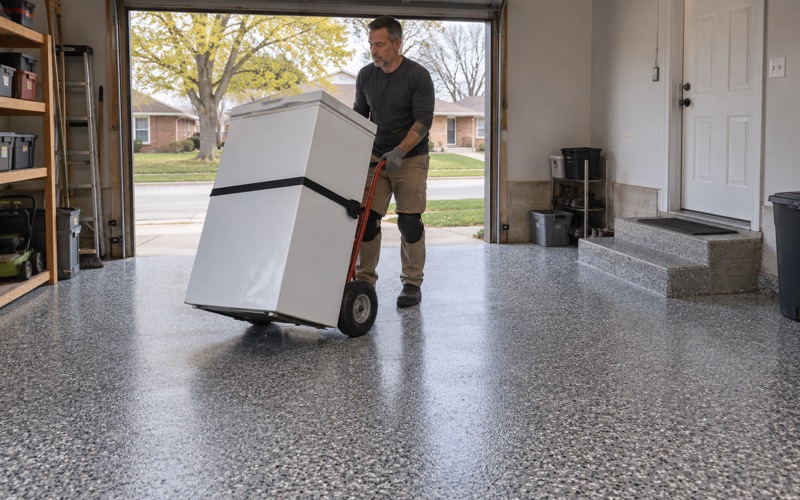
Most Lake Zurich calls are still for a home garage or basement, and those floors get a lighter system than any brewhouse would. A two-car garage usually suits a ground slab, a 100% solids epoxy or polyaspartic base, a flake broadcast and a topcoat chosen to resist hot tire pickup. The same moisture test, the same grinding and the same written build apply, because a residential slab fails for the same reasons a commercial one does.
Working around operating hours
Commercial floors are installed around the hours the building has to keep running, which can mean overnight shifts, weekend windows or phasing one room at a time. Curing is planned against slab temperature and the dew point spread at the surface rather than the calendar, because amine blush and a poor cure follow a cold or damp slab. Grinding dust and slurry are collected on site and never rinsed toward a street drain.
Paperwork before the first pass
Illinois issues no state license for coatings work, so we confirm what the Village of Lake Zurich expects for contractor registration, bond and insurance before a job is scheduled. Coatings are chosen within the Illinois VOC limits in 35 Ill. Adm. Code Part 223 Subpart C, which bind the installer as well as the manufacturer. On home jobs, a written contract and the Home Repair: Know Your Consumer Rights pamphlet come before any work starts, as the Illinois Home Repair and Remodeling Act requires.
- 20+ Years Coating Floors
- Moisture Testing in Every Scope
- Free Written Estimates