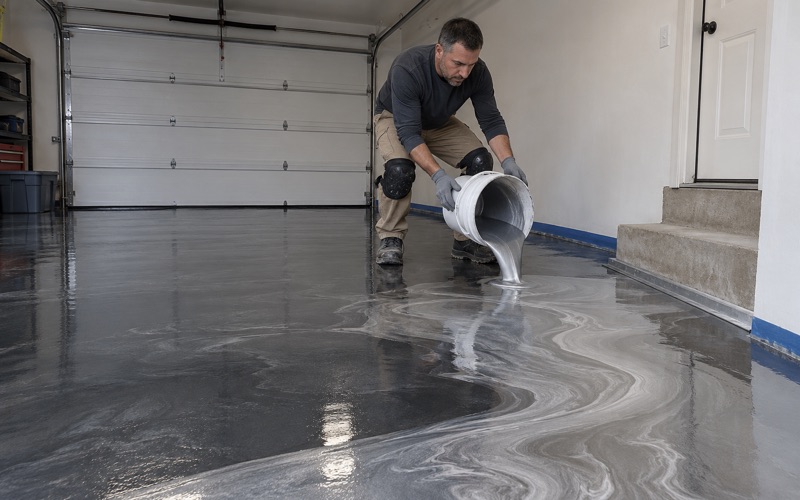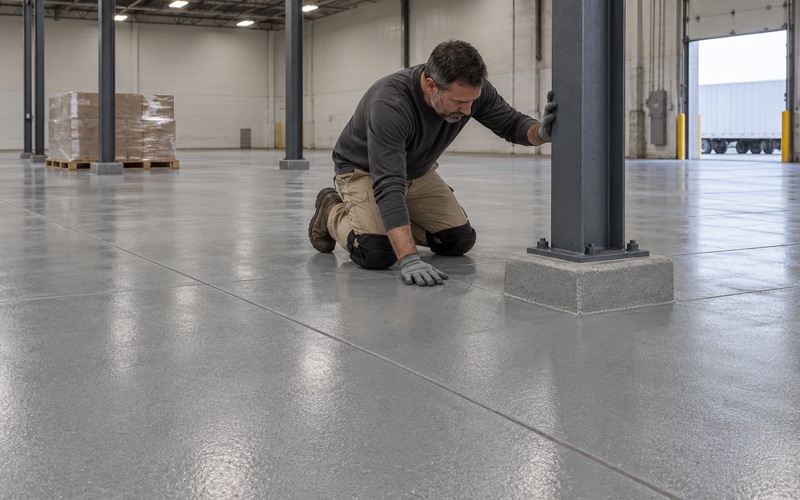
Waukegan Epoxy Flooring has spent more than 20 years installing epoxy flooring in Gurnee, and a large share of that work sits on commercial slabs that never get a quiet week. Sales floors, food-service kitchens, stockrooms and service corridors take wear a house rarely sees, and a coating chosen for a garage will not survive it. We match the system to the traffic, not to a catalog page.
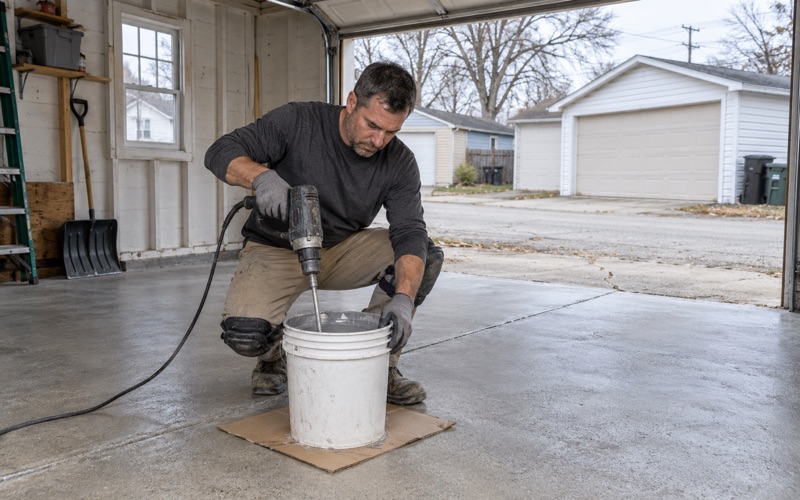
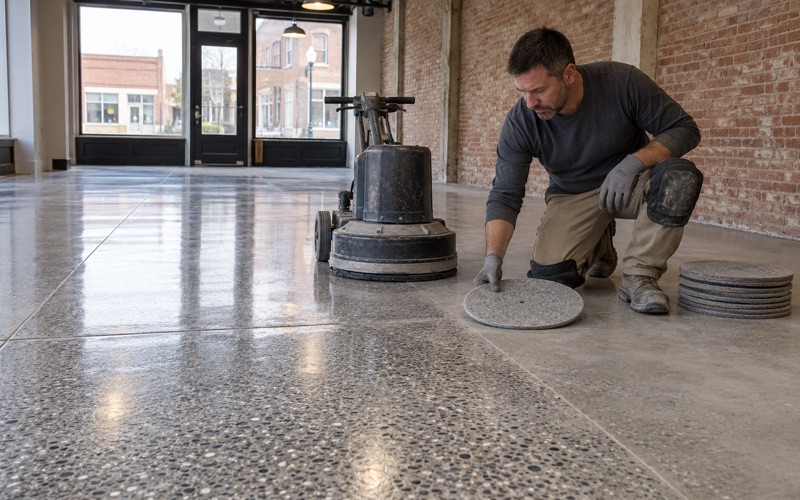
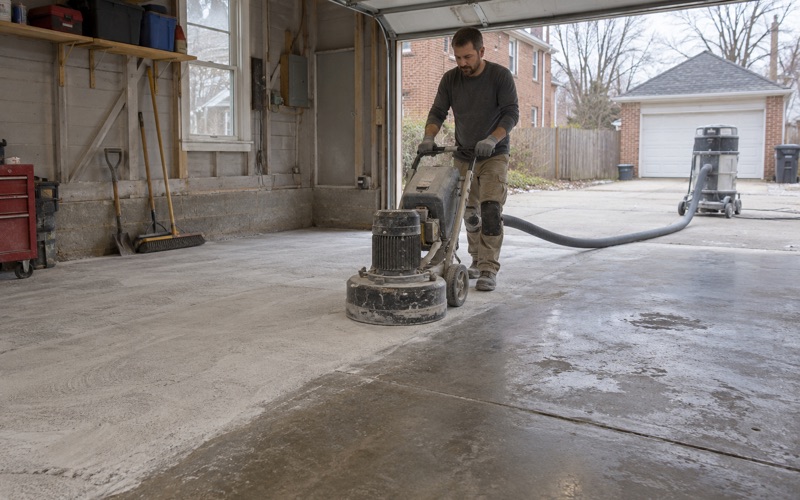
Every floor starts the same way. The slab is opened with a diamond grinder or a shot blaster, never acid etched, so the primer has a real profile to bite into. Moisture testing is written into the scope as its own line, and the proposal names the product, the system build and the finished thickness, so an owner or store manager can hold what was quoted against what went down.
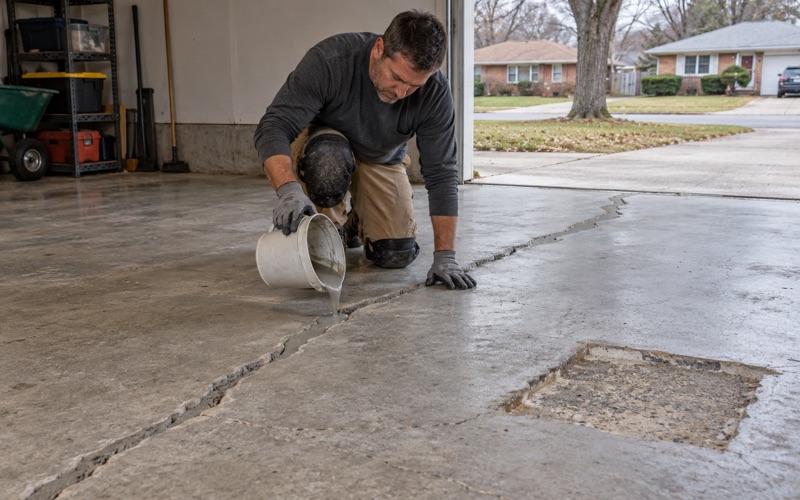
We also read the cracks and any old coating before we price a job. When a slab needs repair or replacement before it can carry a coating, we say so at the estimate rather than after the floor has failed.
Commercial floors in a village built around Gurnee Mills and Great America
Gurnee is a village in Lake County, roughly 40 miles north of Chicago, and two of the region’s biggest draws sit inside its boundary rather than just at a Gurnee mailing address. Gurnee Mills opened on August 8, 1991, covers about 1.94 million square feet and runs two food courts. A coordinate inside Six Flags Great America also falls within the village line, in Warren Township.
That shapes the floors around the Grand Avenue and I-94 interchange. The shops, restaurants and service businesses that grow up beside a regional outlet mall and an amusement park inherit tourist-volume foot traffic, and their concrete wears accordingly. To be clear, we hold no contract with the mall’s owner or the park; we work for the business and property owners in the area around them.
Food courts and front-of-house traffic
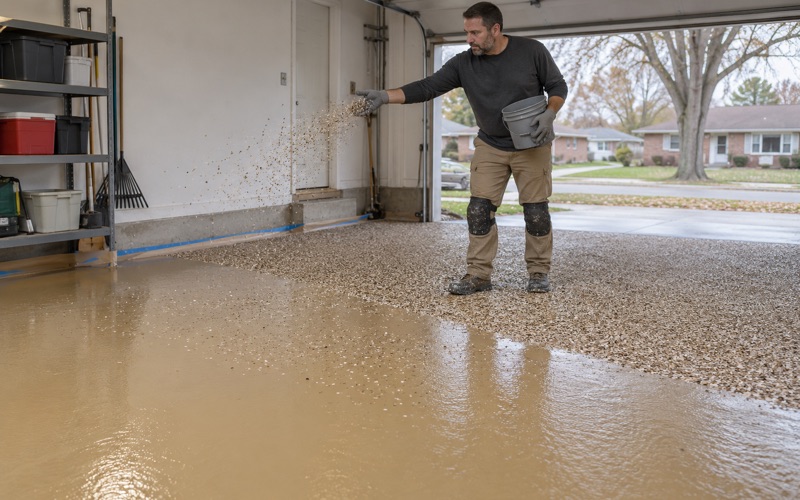
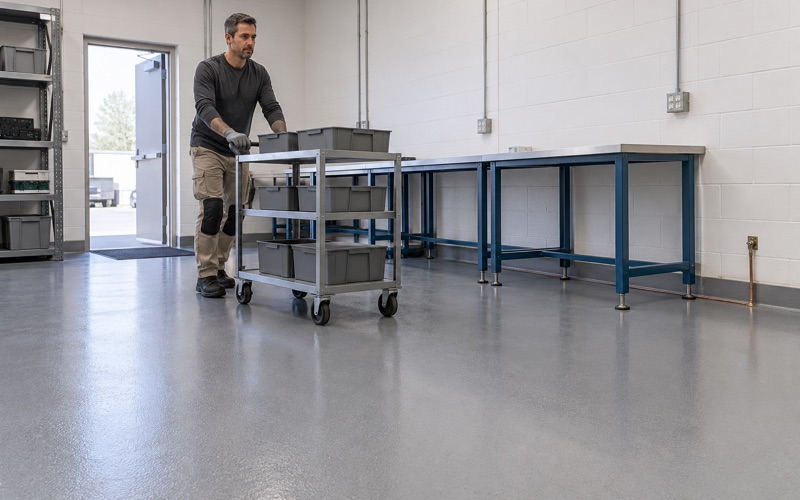
Heavy foot traffic grinds grit into a floor along predictable paths: entries, queue lines and the strip in front of a counter. A thin roll-on coating shows those paths within months. For a busy sales floor or seating area we lean toward a 100% solids epoxy base with a quartz aggregate broadcast and a polyaspartic or polyurea topcoat, which gives texture underfoot and a wear layer that can be renewed later without grinding back to bare concrete.
Restaurant kitchens and back-of-house
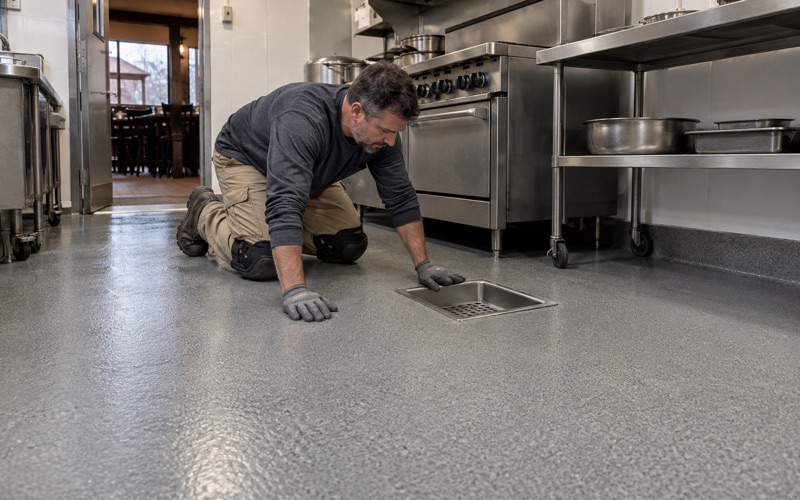
Kitchen floors face heat, hot washdowns, grease and constant wet mopping. Urethane cement is usually the better choice there, because it tolerates thermal shock and hot cleaning water that would soften an ordinary epoxy. FDA Food Code 6-201.13 calls for coved floor and wall junctures, so we build the cove into the same system instead of leaving a seam where water collects.
Food Code 6-201.11 asks for smooth, durable, easily cleaned floors but allows an antislip surface in traffic areas, which is where a broadcast texture earns its place. Food service permitting and inspection in Lake County runs through the Lake County Health Department, so a kitchen owner planning a remodel should confirm with them what needs review before the floor is scheduled.
Stockrooms and receiving areas
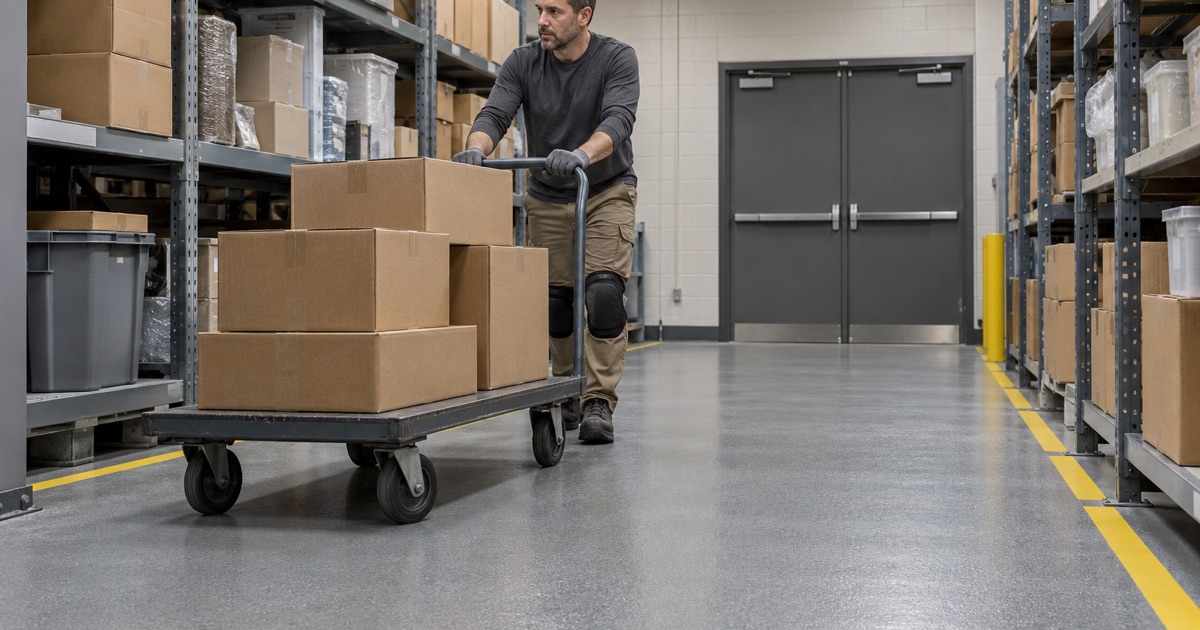
Stockrooms take pallet jacks, hand trucks and dropped cases rather than shoppers. The concern there is impact and abrasion at the receiving door and down the rack aisles, and a thicker epoxy build with a hard topcoat handles that better than a decorative flake system would. Transitions matter as much as the field: where a stockroom meets a sales floor or a kitchen, we detail the joint so a cart wheel rolls over the change in system instead of chipping its edge.
Many tenant spaces need all three systems at once, a textured front, a coved kitchen and a hard-wearing back room. We price each zone on its own line so a manager can see why one area costs more per square foot than another, and can phase the work zone by zone if the budget calls for it.
Looking for epoxy-flooring closer to North Chicago? See North Chicago Epoxy-Flooring.
Scheduling a coating around retail and restaurant hours
A store that closes for a week loses sales, and a restaurant that closes loses its regulars too. Most of our commercial work in Gurnee is planned around the hours a business has to stay open, which usually means overnight shifts, weekend windows or a floor finished in phases.
Walking the space before the quote
A commercial schedule is only as good as the walk-through behind it. Before we quote, we look at where deliveries arrive, which doors must stay open for fire exits, where fixtures and display racks have to move, and how much power the grinders can draw without tripping the store’s circuits. Those answers decide how many nights a job takes far more than the square footage does.
Phased installs on a floor that stays open
On a larger space we divide the floor into sections and coat one while the rest stays in service. Dust collection, containment and clear signage keep the open side usable. Grinding dust and slurry are gathered on site and never rinsed toward a storm drain on Grand Avenue or anywhere else.
Overnight cure windows
Fast-curing polyaspartic topcoats can take light foot traffic within hours, and that is what makes an overnight install realistic. Cure speed still depends on slab temperature and the dew point spread at the slab surface, not the clock on the wall. An epoxy laid in cool, damp air can develop amine blush, a waxy film that keeps the next coat from bonding, so we take readings before each coat.
When the readings say a coat needs longer, we tell the manager before the shift starts rather than at 6:00 a.m. with the doors about to open. A reopening plan built on honest cure times beats a floor that scuffs on its first morning.
Odor and neighboring tenants
Ventilation matters more when the unit next door is trading. Every coating we use is chosen within the Illinois limit on VOC content, a rule that binds us as the installer as well as the manufacturer, and lower-odor systems keep adjacent tenants and their customers comfortable while the work goes on.
Garage floors in Gurnee’s 1990s and 2000s neighborhoods
Away from the commercial corridor, most of Gurnee is owner-occupied housing. Census estimates count 12,081 housing units in the village, and 52.8 percent of them were built between 1990 and 2009; fewer than 7 percent date from 2010 or later. About 7,064 owners live in detached houses, so a garage slab poured in those two decades is the center of our residential work here.
What winter tracks in
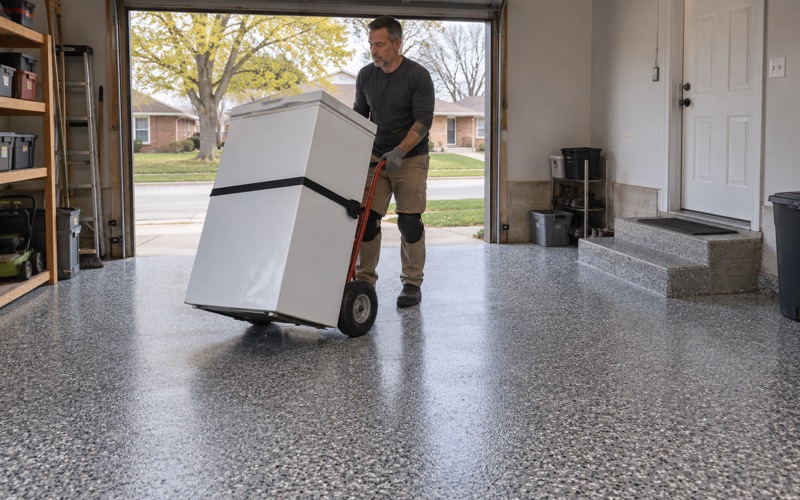
Lake County winters bring calcium chloride brine and rock salt in on every tire. Salt water pools under the car, works into unsealed concrete and attacks thin coatings at their edges. We build garage floors for that load: a fully bonded base on a ground surface, a vinyl flake broadcast if the owner wants one, and a chemical-resistant polyaspartic topcoat carried right to the walls.
Hot tire pickup is a bond problem
Hot tire pickup, where warm tires soften a coating and lift it away, is mostly a failure of bond. A one-day kit rolled onto smooth concrete peels, while a coating anchored to a slab ground to the right ICRI surface profile holds. That is why we grind every garage, including the ones that look clean.
Moisture, cracks and the calendar
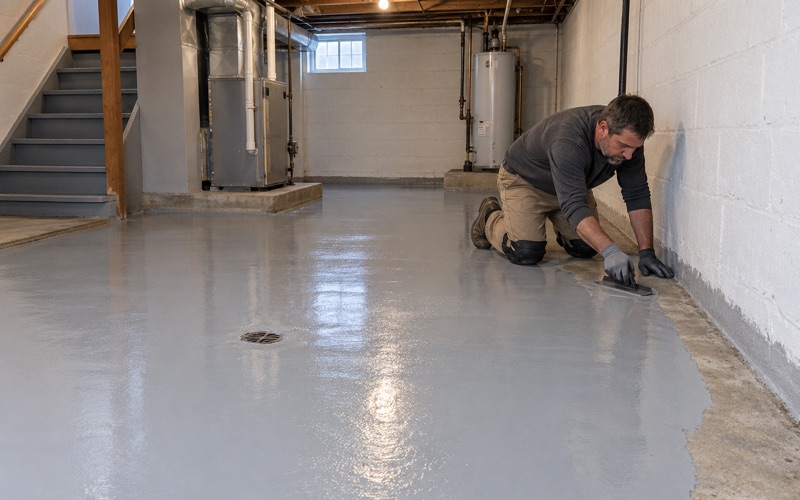
A dry-looking garage can still move vapor, so we test it the same way we would a basement, with ASTM F1869 calcium chloride kits or ASTM F2170 in-situ humidity probes depending on the slab. Warranty exclusions are read out before the job is sold, and moisture is the first one named.
Cracks get the same plain talk. A coating is a film that follows the concrete under it; it will not stop a slab from moving, and a crack that is still active will telegraph through. Cure also depends on slab temperature, so an unheated garage coated in deep winter is a garage we would rather schedule for spring. Homeowners who call in January usually get a measured quote then and an install date once the slab warms, rather than a rushed cure that fails by the next winter.
What Gurnee does and does not check about your contractor
The Village of Gurnee’s Community Development department, through Building & Safety, asks contractors to register before a permit is released, and states that no registration form or fee is required. Its published requirements name electricians, low-voltage electricians, plumbers, HVAC contractors and roofers, each with a license and/or a $500,000 general liability certificate. No general contractor requirement is listed, and floor coating is not on it.
Illinois licenses no general, flooring or coatings contractor either. Put together, that means nobody at village hall or in Springfield vets the company coating your floor, and the checking falls to the buyer.
Ask for the insurance certificate
Request a current certificate of insurance and read the dates and limits yourself. A commercial tenant should also check whether the lease sets its own coverage requirement for contractors working in the space. Before any job is scheduled, we confirm the town’s own registration, bond and insurance rules and bring the paperwork to match.
Home jobs get a written contract
On a house, the Illinois Home Repair and Remodeling Act requires a written contract and the state’s Home Repair: Know Your Consumer Rights pamphlet before work begins. We hand over both at signing, not after the grinder is unloaded.
What a coating will not do
The Des Plaines River runs through the village, and its Gurnee gage crested at 12.09 feet on July 15, 2017. A floor coating is not protection against floodwater, and we will not sell it as such. Nor will we market a coating as radon reduction; in Illinois that work takes a radon mitigation license from IEMA, and a sealed floor is not a mitigation system.
- 20+ Years Coating Floors
- Moisture Testing in Every Scope
- Free Written Estimates