Waukegan Epoxy Flooring has spent more than 20 years on epoxy flooring in Grandwood Park and around it, and on this neighborhood’s garages and basements the first question we ask is not about color or flake. It is whether the slab has ever been under water. A floor that took surface water once can look clean and feel dry for years while it still carries silt in its pores and salts working up through the concrete.
That history decides the whole job. It changes which moisture tests we run, how hard the slab has to be ground before anything sticks to it, and which primer goes down first. It also decides what we will put in writing about the finished floor, because a coating is a film bonded to the concrete, and the concrete underneath still behaves the way it always has.
So every quote here starts with a walk of the floor, a look at the cracks and any old coating, and a moisture test listed as its own line in the scope. The proposal then names the product, the system build and the finished thickness, so the floor that goes down can be checked against the one that was promised.
Grandwood Lake, Mill Creek and the 2019 Dam
Grandwood Park is a census-designated place in Warren Township, Lake County, with a 2020 population of 5,297, and it is built around a lake that is really a dammed creek. Mill Creek, a tributary of the Des Plaines River, flows through Grandwood Lake, a 12-acre body of water with an average depth of 5 feet. The Grandwood Park Park District owns the lake and the dam that holds it.
A timber dam from 1941
The original dam was a timber structure built in 1941. Problems with it were documented from 2012, and it was declared a significant safety hazard through the Mill Creek Watershed Plan. Heavy rains in July 2017 left floodwater averaging about a foot deep across the adjoining Lake Park and nearby residences, and before the rebuild, floods reached those parks and homes every spring and summer.
Construction on a replacement began in November 2018. The new dam opened with a ribbon cutting on September 20, 2019, with a concrete-enhanced primary spillway and an 80-foot stone-armored secondary spillway. The Lake County Stormwater Management Commission and a county infrastructure fund paid 40 percent of the cost, $170,000.
Why a new dam does not settle an old floor
The rebuild changed how the lake handles a heavy storm from here on. It did nothing for a basement or garage slab that already sat in floodwater before 2019. Concrete is porous, and whatever reached it during those years can still be in it.
That is the practical reason this page leads with water rather than with flake colors. On homes near Lake Park and along the Mill Creek corridor, we treat the slab’s surface-water history as something to test, not something to guess at from how the floor looks on the day we visit.
Looking for epoxy-flooring closer to Zion? See Epoxy-Flooring in Zion.
Floors That Have Seen Water: Testing Before Coating
A slab that was flooded and then dried out is not the same as a slab that never got wet. Silt settles into the surface and into every crack and control joint. Dissolved salts move through the concrete as it dries and leave a white crust called efflorescence, and a coating laid over either one is bonded to the contamination rather than to the concrete.
Dry it first, then measure it
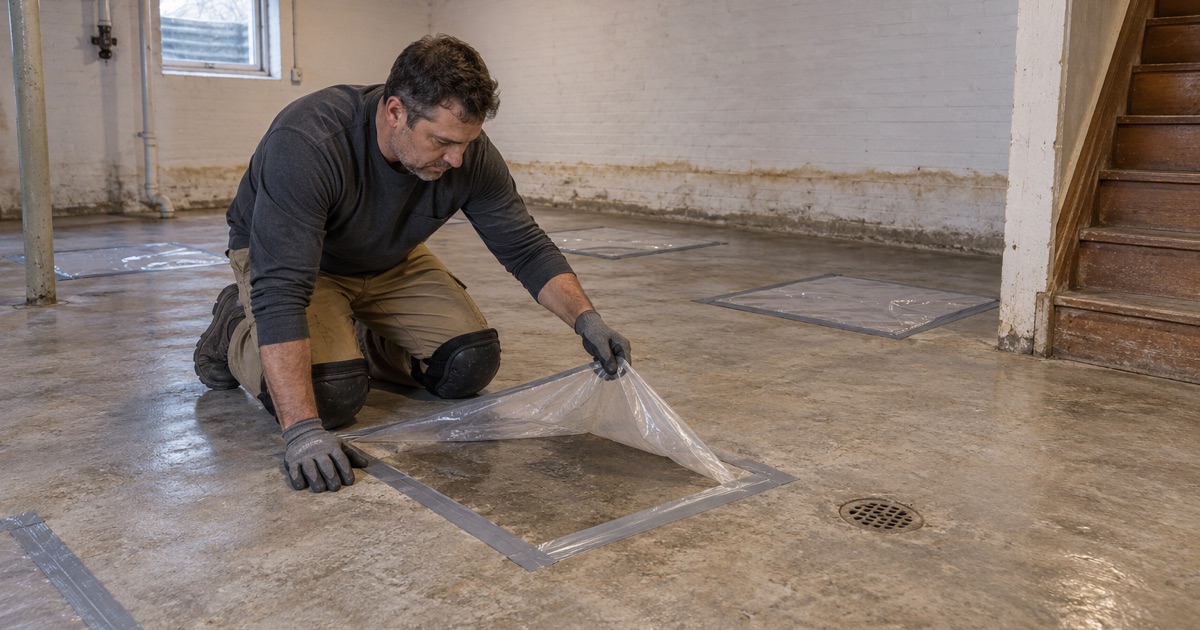
We do not test a floor that is still drying out from a recent event, because the reading would describe the event and not the slab. Once the space has had time to dry, a quick ASTM D4263 plastic sheet test shows whether moisture is still collecting at the surface. For numbers we can write down, we use ASTM F1869 calcium chloride kits to measure the moisture vapor emission rate, or ASTM F2170 in-situ relative humidity probes set into drilled holes.
Those readings are compared against the thresholds the product maker publishes, with ASTM F710 as the reference for how a slab is judged ready. If a floor reads too wet for a standard system, we say so and price a moisture-mitigation primer, or we tell the owner to wait. Testing is in the quote from the start, not an add-on sold after a floor has already blistered.
Getting silt and efflorescence out of the surface
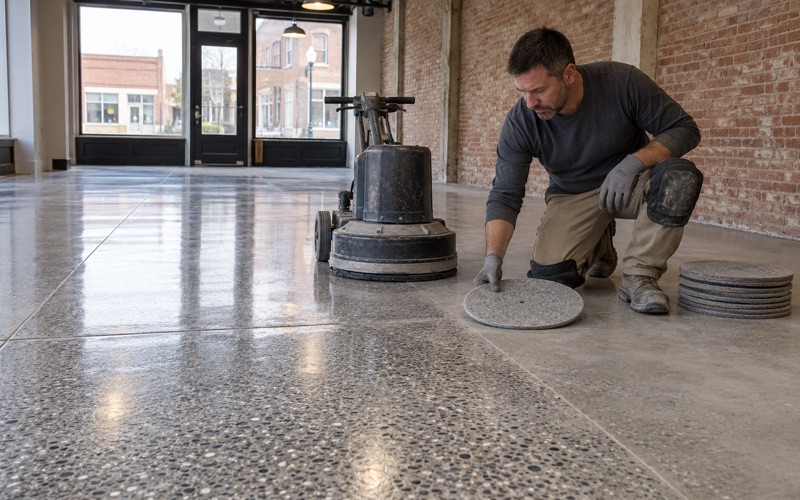
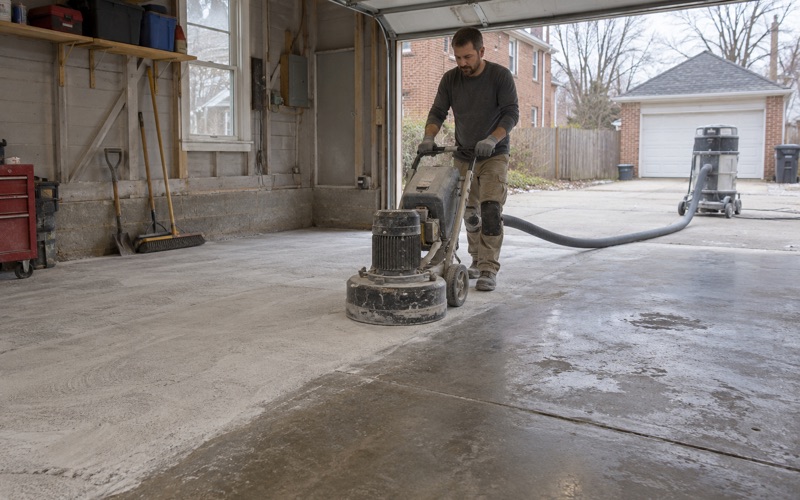
Cleaning a flooded slab with a mop and a degreaser leaves most of the problem behind. We open every slab mechanically with diamond grinding or shot blasting, down to the ICRI CSP surface profile the system calls for, and that cut removes the top layer where silt and salt deposits sit. We never acid etch, which on a floor like this would push more water and dissolved salt into the concrete.
Grinding dust and slurry are collected on site. On a property that drains toward a creek, nothing from the prep gets rinsed toward a street drain.
What a coating will and will not do
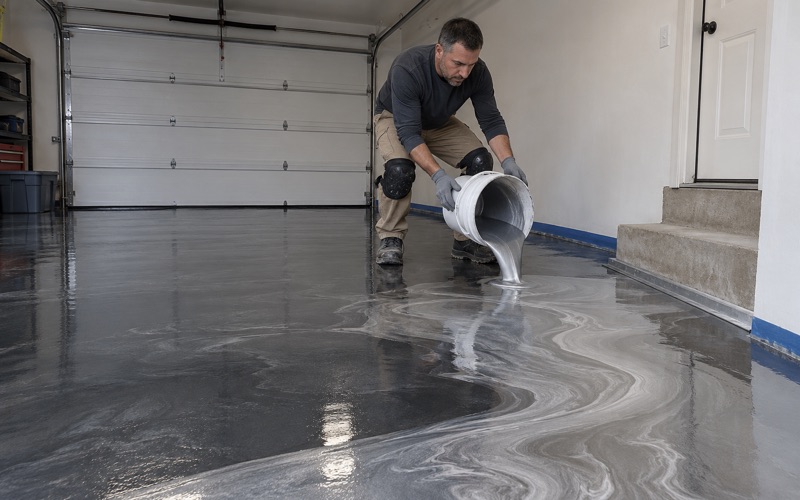
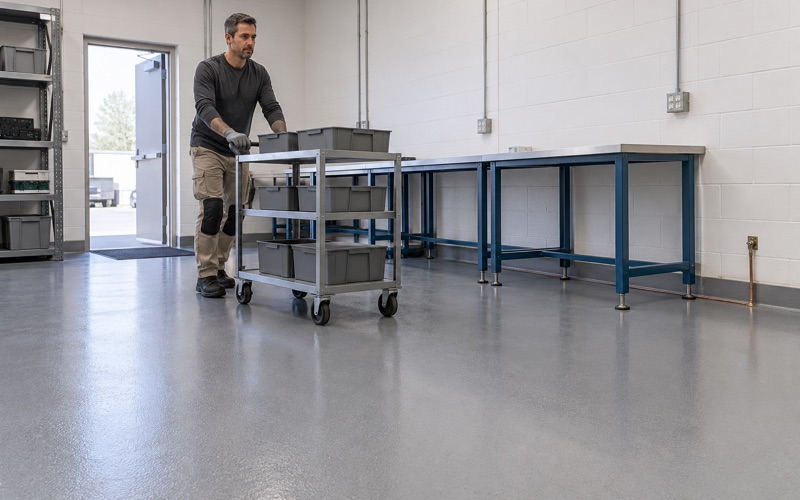
A 100% solids epoxy or a polyaspartic topcoat makes a sealed, cleanable surface that sheds a spill, a tracked-in puddle or a muddy boot. It is not a barrier against water coming in from outside, and it does not keep a basement or garage dry. If water rises in a room again, the coating will be standing in it along with everything else.
We say that before the job, and moisture is the first exclusion we read out when we go over the warranty. A floor owner near the lake should hear it from us plainly rather than discover it in the fine print later.
Basement Floors Near Lake Park
Basements are where a surface-water history and the ground underneath meet. Water that reached a yard can find its way into a lower level, and groundwater in the clay till soils common in Lake County can press up against the bottom of a slab as hydrostatic pressure. Both leave marks on the concrete we look for during the walk.
Reading the stains and the drains
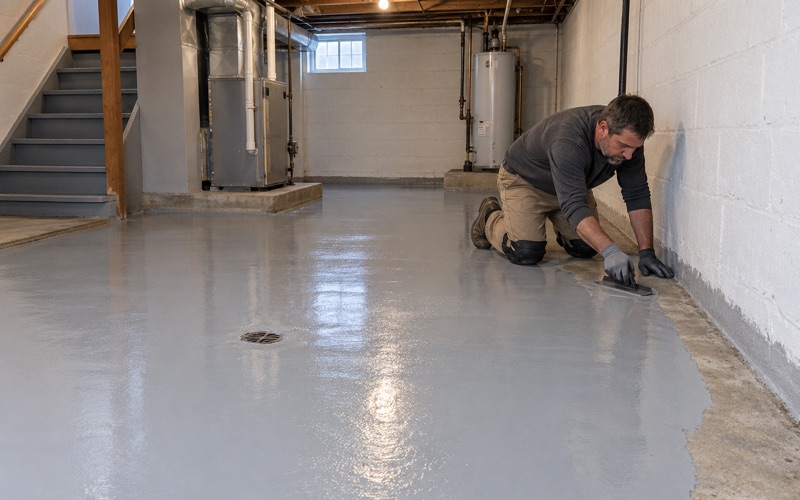
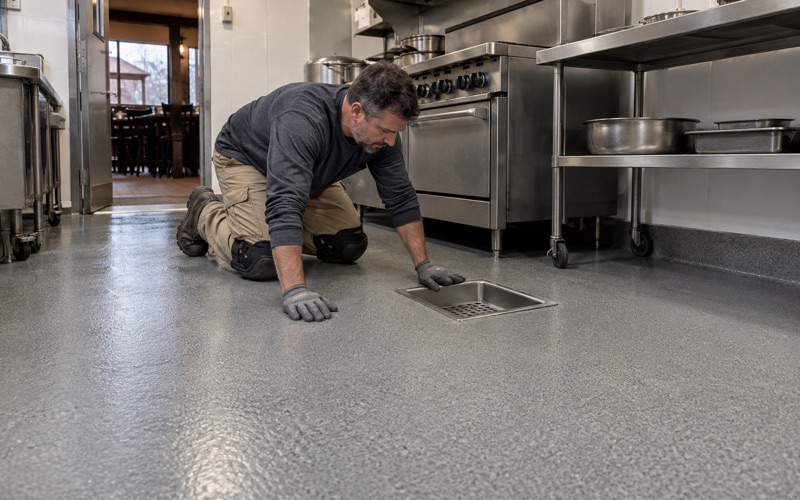
Tide lines along a wall, a ring of efflorescence around a floor drain, and loose patches of an old coating all tell us where water has been. We check the sump pit and floor drain before quoting, because the coating has to be detailed around them so that it neither clogs a drain nor traps water at a pit lid.
We also ask whether the basement has ever had a sewer backup. That changes the cleaning before any grinding starts, and it is a separate problem from creek water that a floor coating does not solve.
Choosing a system for a damp-history slab
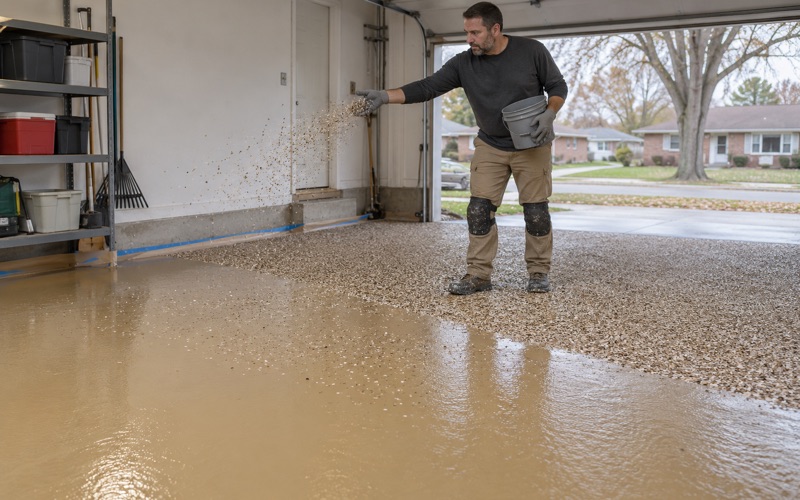
When readings are borderline, a moisture-mitigation primer goes down first and the rest of the system is built on it. For a basement used as a workshop, laundry or playroom, a 100% solids epoxy base with a vinyl flake or quartz aggregate broadcast gives texture and hides the wear of daily use. Where a basement still reads wet after drying, we recommend against coating it yet rather than sell a floor we expect to fail.
Cracks, old coatings and honest limits
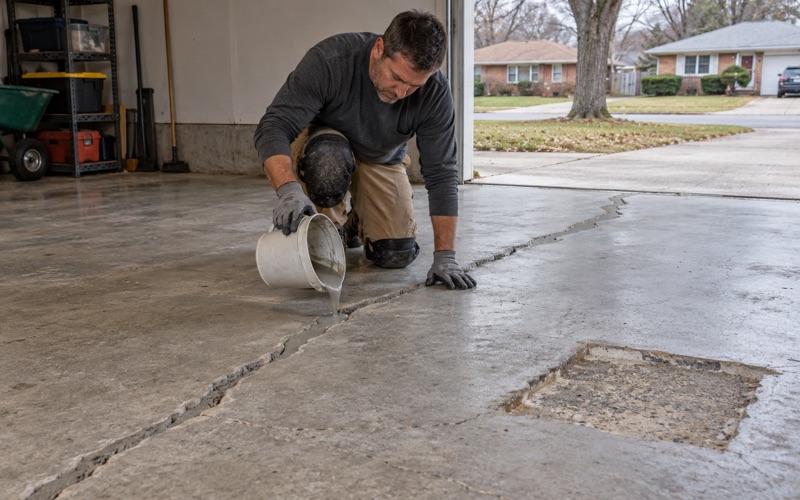
A slab that has settled or cracked after years of wet and dry cycles needs to be judged before it is coated. We read every crack and every patch of old coating, and when a section needs repair or replacement first, the quote says so. A coating follows the concrete under it, so it will not hold a moving crack together, and we tell the owner that before work begins.
Garages in Grandwood Park’s 1960s and 1990s Houses
Grandwood Park’s homes came mostly in two waves. Census estimates count 513 housing units built in the 1960s and 792 in the 1990s, out of 2,075, and owner-occupied detached houses make up the large majority of owner homes. In practice that means two kinds of garage floor, decades apart in age, often on the same few streets.
What we find on each kind of floor
An older garage slab usually comes to us with a few generations of patches, paint or a failing one-part coating, and sometimes cracks that have moved. A 1990s garage is more often bare concrete with oil stains and the surface wear of 30 years of tires. Both get ground to a fresh profile, but the older floor tends to need more crack and patch work, which we price before the job rather than discover halfway through it.
Built for Lake County winter traffic
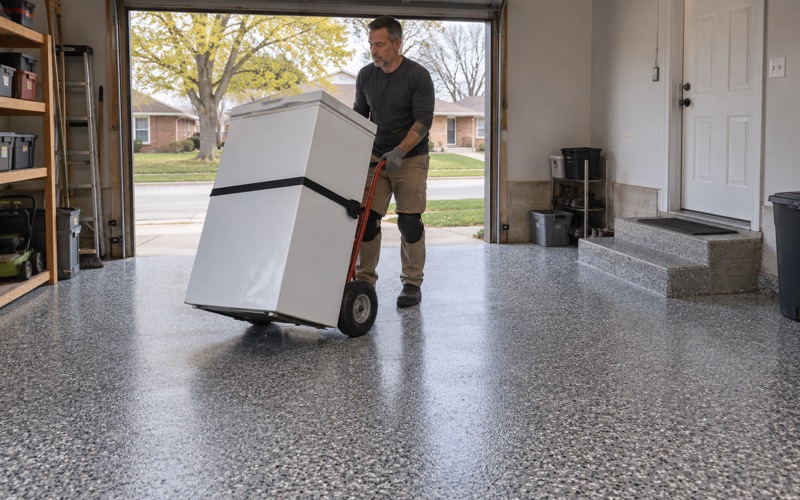
The biggest daily load on a Grandwood Park garage floor is what the car brings in. Calcium chloride brine and rock salt ride in on the tires all winter and sit in puddles on the slab, so we build garage systems with a full broadcast and a polyaspartic or polyurea topcoat that resists salt, oil and hot tire pickup. Curing is scheduled by slab temperature and dew point spread at the surface, and an unheated garage that is too cold simply waits for spring.
Permits, paperwork and who is in charge
There is no village government here. The Grandwood Park Park District, established in 1965, owns the lake and dam and serves as the community’s local agency, while building permits come from Lake County Planning, Building & Development. The county requires a permit for new structures, additions and alterations, exempts painting and carpet installation, and offers registration in lieu of a permit for listed minor improvements, so we confirm which track a floor job falls under, along with any bond and insurance expectations, before a job goes on the schedule, since Illinois issues no state license for flooring or coatings contractors.
Every home job gets a written contract and the Home Repair: Know Your Consumer Rights pamphlet before work starts, as the Illinois Home Repair and Remodeling Act requires. Our coatings are chosen within the Illinois VOC limits for architectural coatings, which bind the installer as well as the manufacturer. And if a basement owner asks whether a floor coating will help with radon, the answer is no; that work takes an IEMA radon mitigation license, and we do not sell a coating as a substitute for it.
- 20+ Years Coating Floors
- Moisture Testing in Every Scope
- Free Written Estimates