Waukegan Epoxy Flooring has spent more than 20 years putting epoxy flooring in Beach Park basements, utility rooms and garages, and the floors we see here often carry a history the homeowner never thought about. A slab that once held a pressure tank, a softener and a filter housing does not look like the rest of the basement once that equipment is gone. Our job starts with reading those marks before we price anything.
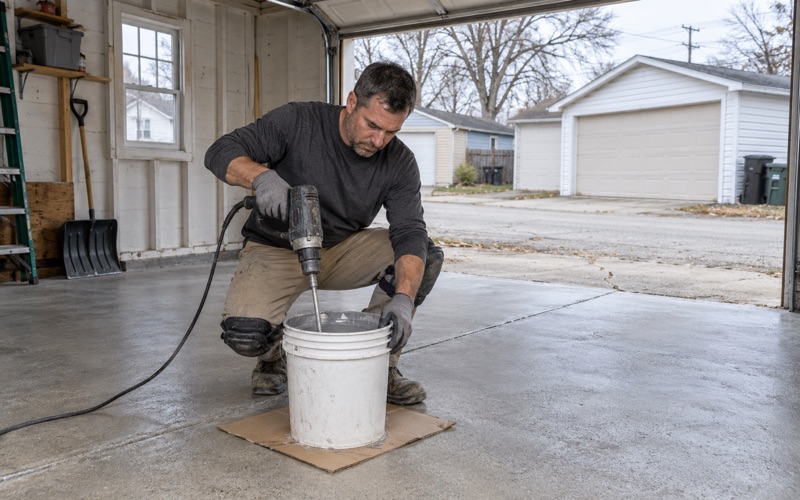
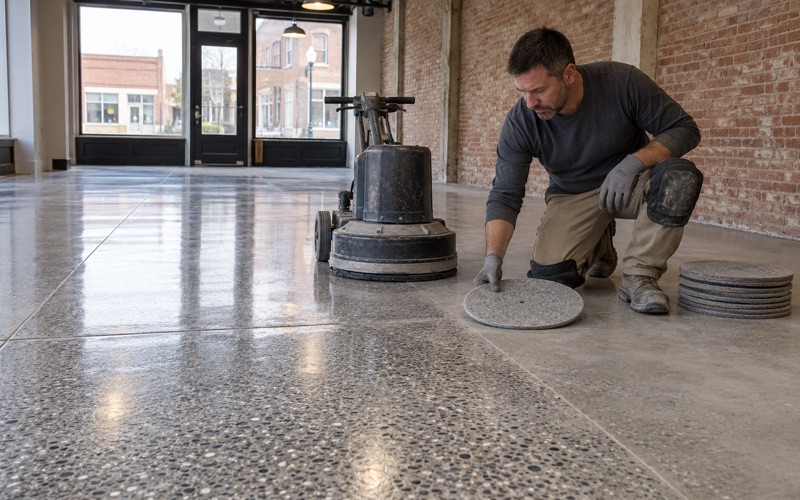
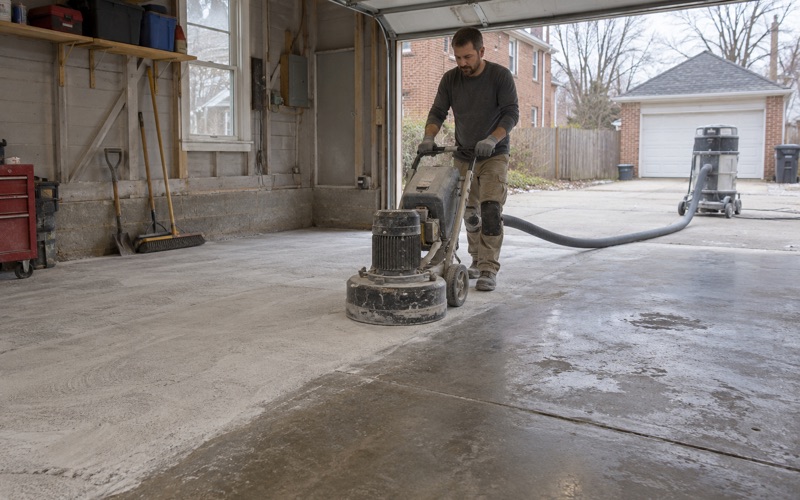
Every floor we coat is opened with a diamond grinder or a shot blaster first. We do not acid etch, because etching leaves an uneven profile and does nothing about the patched areas that matter most on a converted slab. The proposal you receive names the product, the system build and the finished thickness, so you can check what went down against what was quoted.
We also treat moisture as part of the scope rather than an upsell. A basement slab that looks dry can still push vapor through it, and an older one may have no vapor retarder underneath at all. Testing comes first, then the coating plan.
Beach Park’s Water Rule and the Houses It Changes
Connection at sale or a major well repair
The Village of Beach Park owns its own waterworks and buys Lake Michigan water from the City of Waukegan, which treats it before it reaches the village system. The village also owns its sewer system, which carries wastewater to the North Shore Water Reclamation District. On its water and sewer page, the village lists Ordinance 13.04.050, which requires a home to connect to public water at property transfer or when a private well needs a major repair.
That rule matters to a floor project because it sets the moment a basement changes. A house can sit on its original well for decades, and then a sale or a failed pump triggers the switch. The buyer inherits a utility room that was rearranged a few weeks before closing, or the seller hires a plumber in a hurry and the floor is left as it lands.
The village enforces it
Beach Park takes the requirement seriously. In March 2024 the village cited a resident who had disconnected from the public water supply in violation of the village code, and a Lake County judge fined him $74,000 plus $100 in court costs. The house had been served by its well since it was built in 1951.
We mention that case because it explains why we keep meeting freshly converted basements here. Older houses that once ran on wells are moving onto village water as they sell or as their wells wear out, and each conversion leaves a footprint on the concrete. Nobody has handed us a count of how many homes are still on wells, so we take each house as we find it.
What the changeover physically involves
A well-to-village changeover typically brings a new water service line through or under the foundation, a new meter set, and the removal of the well pressure tank along with any softener, iron filter or treatment equipment that sat beside it. The plumber’s work is finished when the water runs. Nobody on that crew is thinking about the floor coating that might come later, and they should not have to.
Buying or selling during a conversion
A sale is the most common trigger, and it compresses everything. The seller wants the connection finished so the closing can proceed, and the buyer often walks into a basement where the utility corner has just been emptied and the concrete still shows chalk lines and fresh mortar. If you are the buyer, that corner is the first thing we want to see, because it decides how much prep the floor needs.
If you are the seller and a coated floor is part of getting the house ready, the order of work matters even more. The plumbing goes first, the patches cure, and only then does the floor get ground and tested. Rushing a coating onto a patch that is still giving off moisture is how a new floor blisters within its first season.
Looking for epoxy-flooring closer to Green Oaks? See Epoxy-Flooring Services in Green Oaks.
What the Old Well Equipment Leaves on the Slab
Anchor holes and footprints
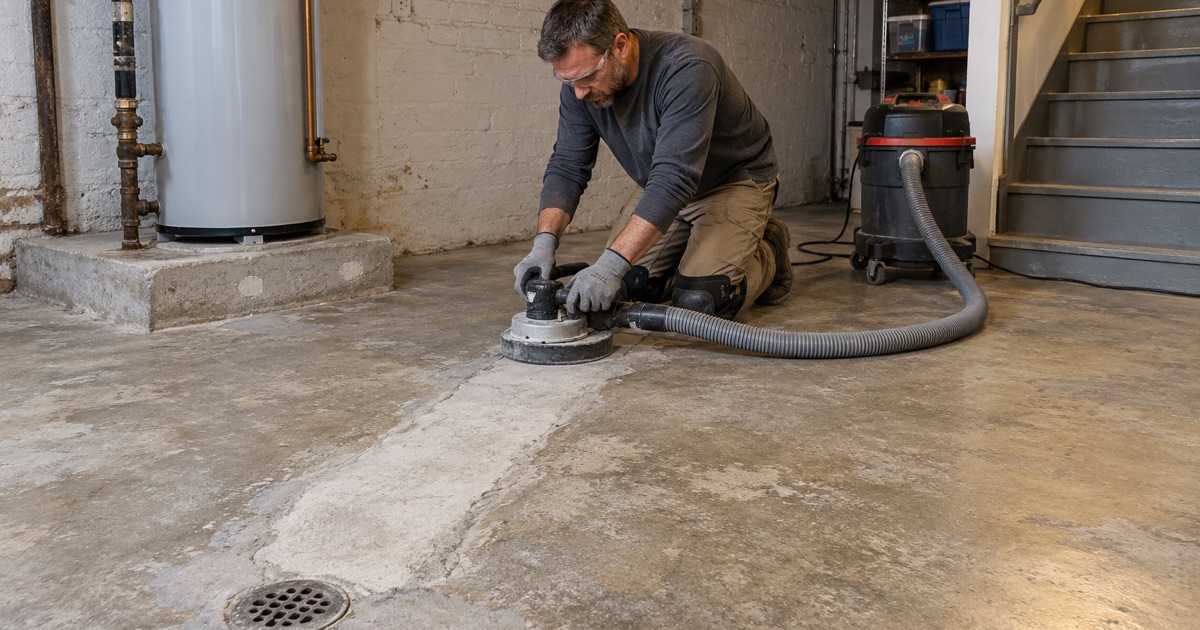
Pressure tanks and treatment units are often set on pads, bolted down or held by brackets anchored into the floor. Once they are pulled, the slab keeps the evidence: drilled anchor holes, rust rings where a tank sweated for years, a raised pad edge, and sometimes mineral staining from a softener that discharged near a floor drain. Those marks read through a thin coating the way a dent reads through fresh paint.
We map them during the walk-through. A rust ring tells us something different than an efflorescence bloom, and a chipped pad edge needs a different repair than a clean anchor hole.
The new service entry
Where the new line came through the wall or up through the floor, the plumber usually leaves a cut-and-patch zone. Fresh patching mortar sitting next to slab concrete that is decades older is two different materials side by side. They absorb primer at different rates, they can hold different amounts of moisture, and the joint between them is a likely place for a hairline crack to telegraph through a finished floor.
Old drains and sump details
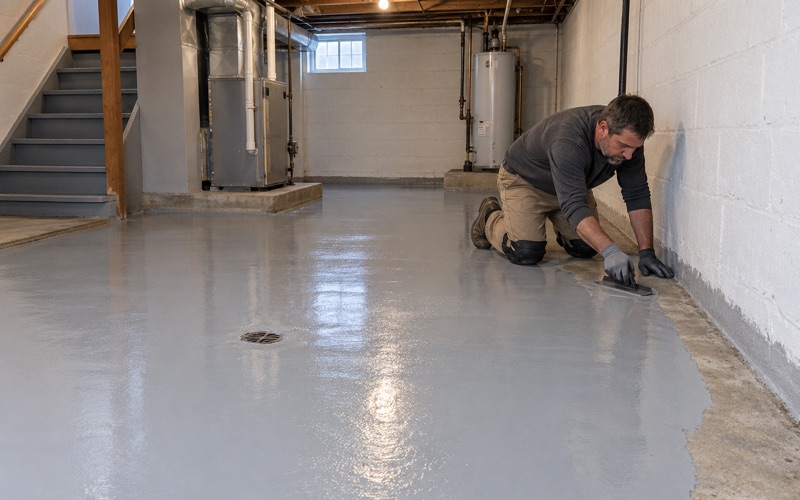
Some conversions also change the floor drain picture. A softener’s discharge line may have run to a floor drain that now sits unused, or a sump pit may be right where the tank used to stand. We detail around both so the coating terminates cleanly at the drain body and the pit rim instead of curling at an edge where water collects.
Patching Before Coating a Basement or Utility Floor
Repair first, then profile
Anchor holes get cleaned out and filled with a repair material compatible with the system we are building, not with whatever caulk happened to be in the truck. Patches from the service entry are tapped to find hollow spots, and a hollow patch gets cut back and replaced. Then the whole floor, patches included, is diamond ground to an ICRI CSP profile that suits the primer, so the coating grips new and old concrete alike.
If the slab under the old equipment is cracked through or heaved, we say so plainly. Some floors need repair or a section replaced before a coating is worth putting on them, and we would rather tell you that at the quote than after a callback.
Moisture testing on a converted slab
A basement that just lost its well equipment has often had water lines opened, a tank drained and a new penetration made in the foundation. That is a good reason to test rather than guess. We use ASTM F2170 in-situ relative humidity probes where we can drill, ASTM F1869 calcium chloride tests where that method fits the job, and an ASTM D4263 plastic sheet test as a quick screen. The results decide whether the floor gets a moisture-mitigation primer under the build.
Our warranty exclusions are read out before the job is sold, and moisture is the first one named. Testing up front is how we keep that exclusion from becoming the reason a floor fails.
A film, not a fix for movement
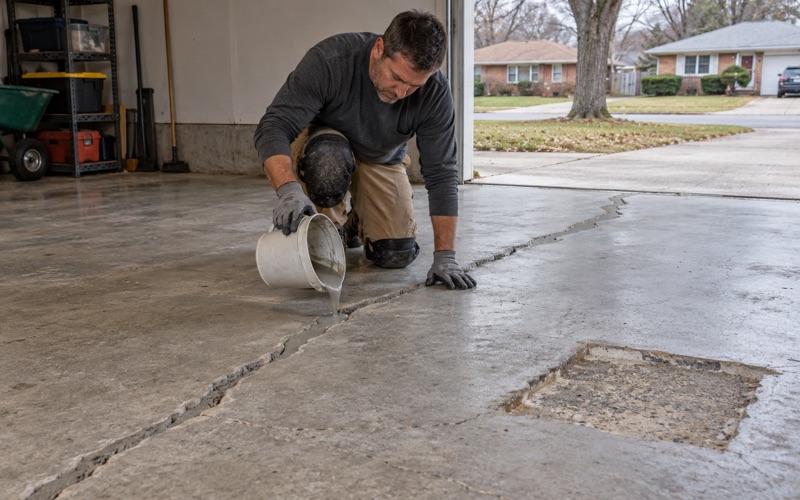
A coating follows the slab beneath it. It will bridge a filled anchor hole and a sound patch, but it will not hold together a crack that is still moving, and we say that before the job begins. Where a service-entry patch meets old concrete, we may treat the joint as a crack and detail it rather than pretend it will stay hidden.
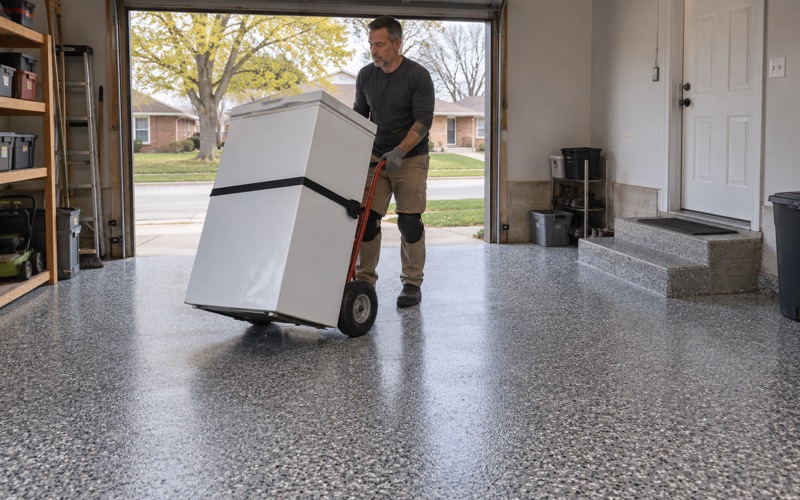
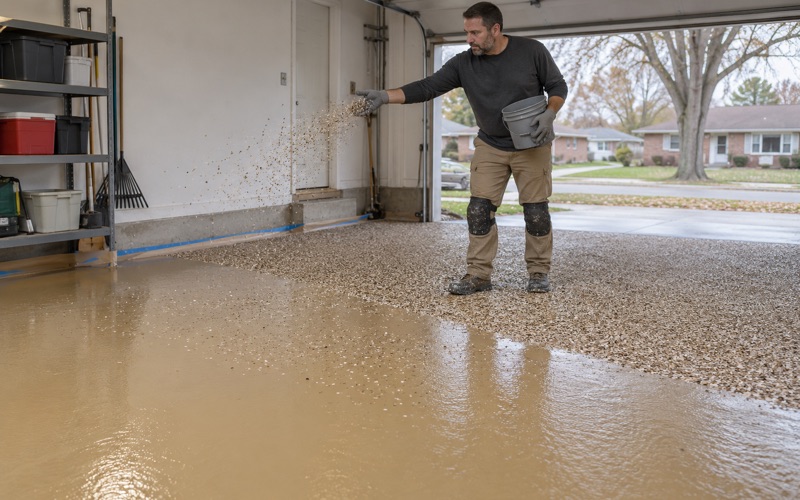
Most basement and utility-room builds we quote are 100% solids epoxy with a vinyl flake or quartz aggregate broadcast and a polyaspartic topcoat. Products are chosen within the Illinois limits on VOC content, which bind the installer as well as the manufacturer.
Getting a Quote in Beach Park
Who signs off on what
Building permits in the village run through Beach Park’s Community Development, Building and Zoning office, and we confirm the village’s current contractor registration, bond and insurance terms before a job is scheduled. Illinois does not issue a state license for flooring or coatings work, so that local check is the one that counts. Water and sewer questions go to the village itself, since it owns both systems.
If the conversion is still underway, we would rather schedule the floor after the plumber is done. Coating first and then cutting the floor for a service line wastes the coating and your money.
Keeping slurry out of the storm drain
Beach Park runs a stormwater program under an NPDES Phase II MS4 permit, with illicit-discharge reporting through Public Works. Grinding slurry and rinse water from floor prep do not belong in a street or storm drain. We collect dust and slurry on site and haul it away, whether the job is a utility room or a two-car garage. The village sits on Lake Michigan and holds the South Beach section of Illinois Beach State Park. A shoreline village with a stormwater permit is not the place to rinse a floor out the garage door.
Garages, contracts and timing
Many of the same houses have a garage that sees Lake County road salt every winter. Our garage builds are made for the calcium chloride brine and rock salt that tires track in, and curing is timed against slab temperature and dew point, not the calendar. An unheated garage may have to wait for spring, and we will tell you so.
Every home job comes with a written contract and the Home Repair: Know Your Consumer Rights pamphlet before work starts, as the Illinois Home Repair and Remodeling Act requires. Send us photos of the room, including where the old tank and treatment gear stood, and we will tell you what the slab needs before we talk about color.
- 20+ Years Coating Floors
- Moisture Testing in Every Scope
- Free Written Estimates